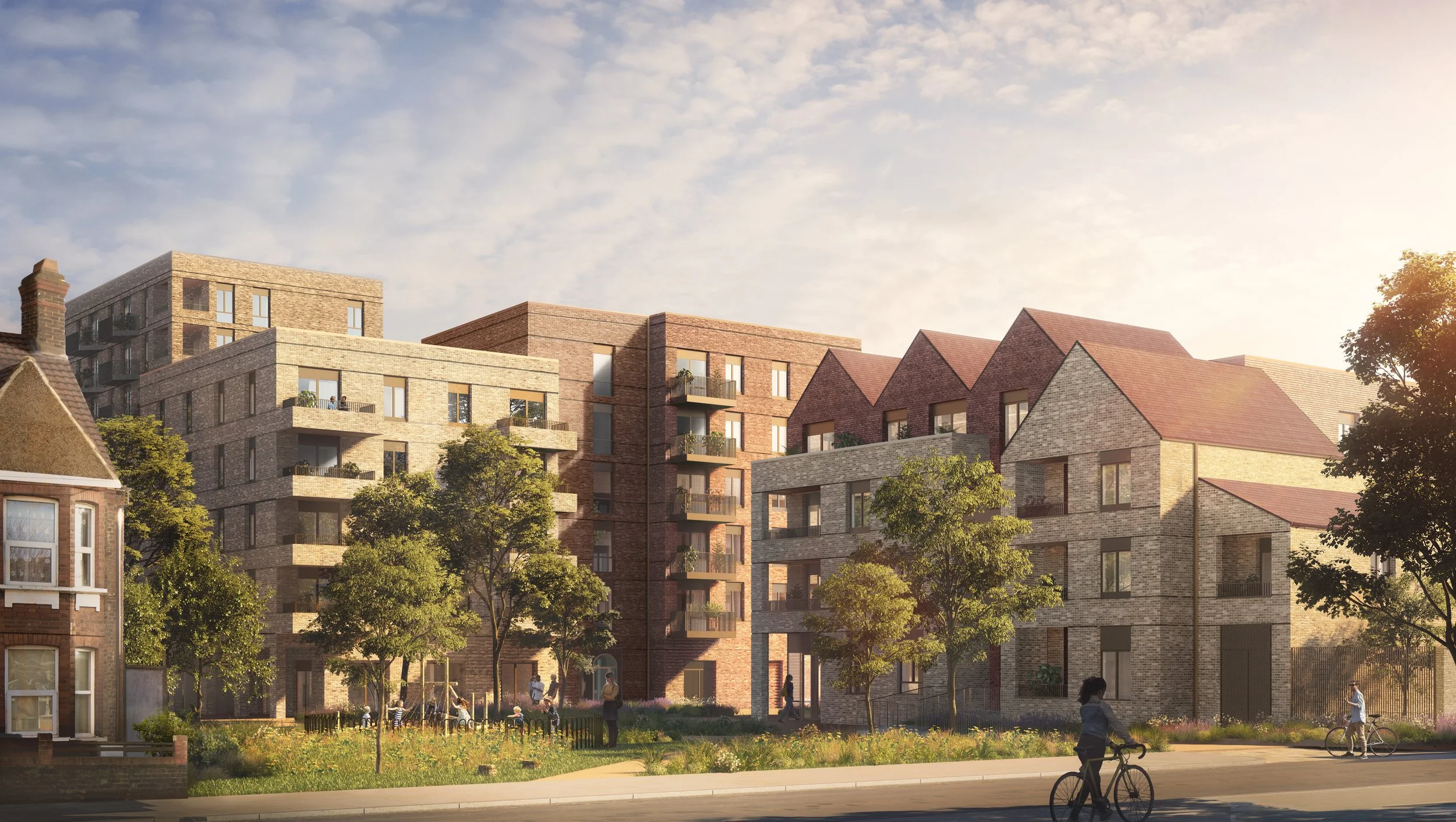
Lea Bridge Gas Works
The creation of 500+ homes as well as a gym and nursery on an old gasworks. To cover the costs of the land restoration, redevelopment of the brownfield site required the intensification of the area. With this requirement, the project entailed the creation of towers that have to manage the concerns of the council and the local community, provide sufficient privacy between each of them, and respect the terraces and flats to the north of the site that only rose between 2 and 3 stories. The final planning submission had a series of blocks that stepped up as it went from the north to the south of the site rising to 15 stories from 3.
I worked on the project throughout its design stage and had various roles. These include, but were not limited to:
the exploration of brick options and facade designs;
the creation of particular design elements like entrances, bridges, and screens;
the production of final drawings, diagrams and 3D renders;
and model making.
On this page, I explore the project and some of the content I produced for it. Only the final site renders were not produced by myself but by an external firm selected to work alongside us as we developed the design.
This was my first project working in Revit but also involved the use of other software including rhino, grasshopper, sketchup, photoshop, illustrator, indesign. I also got experience in resin 3D printing.
As with all projects in my professional section, the presentation style and broad design principle are heavily influenced by the firm’s philosophy and preferences, the priorities of clients, and the goal of achieving planning permission.
Context
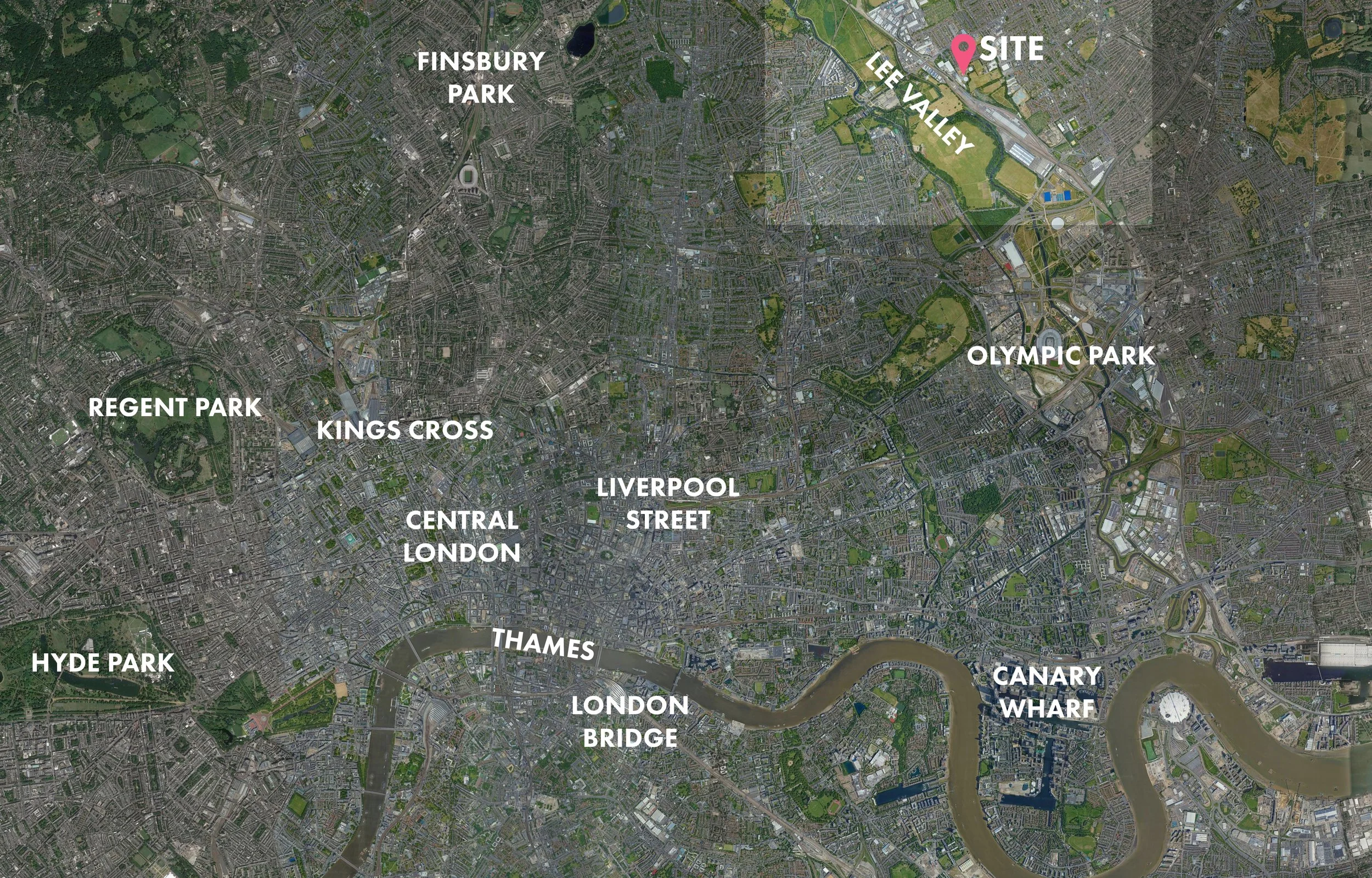
London Context
The site is located along the Lee Valley, adjacent to a large green space that sits along the river Lee. To the north are water reservoirs and to the south the Olympic park and the various new higher-density developments bordering it. The area is close to the city
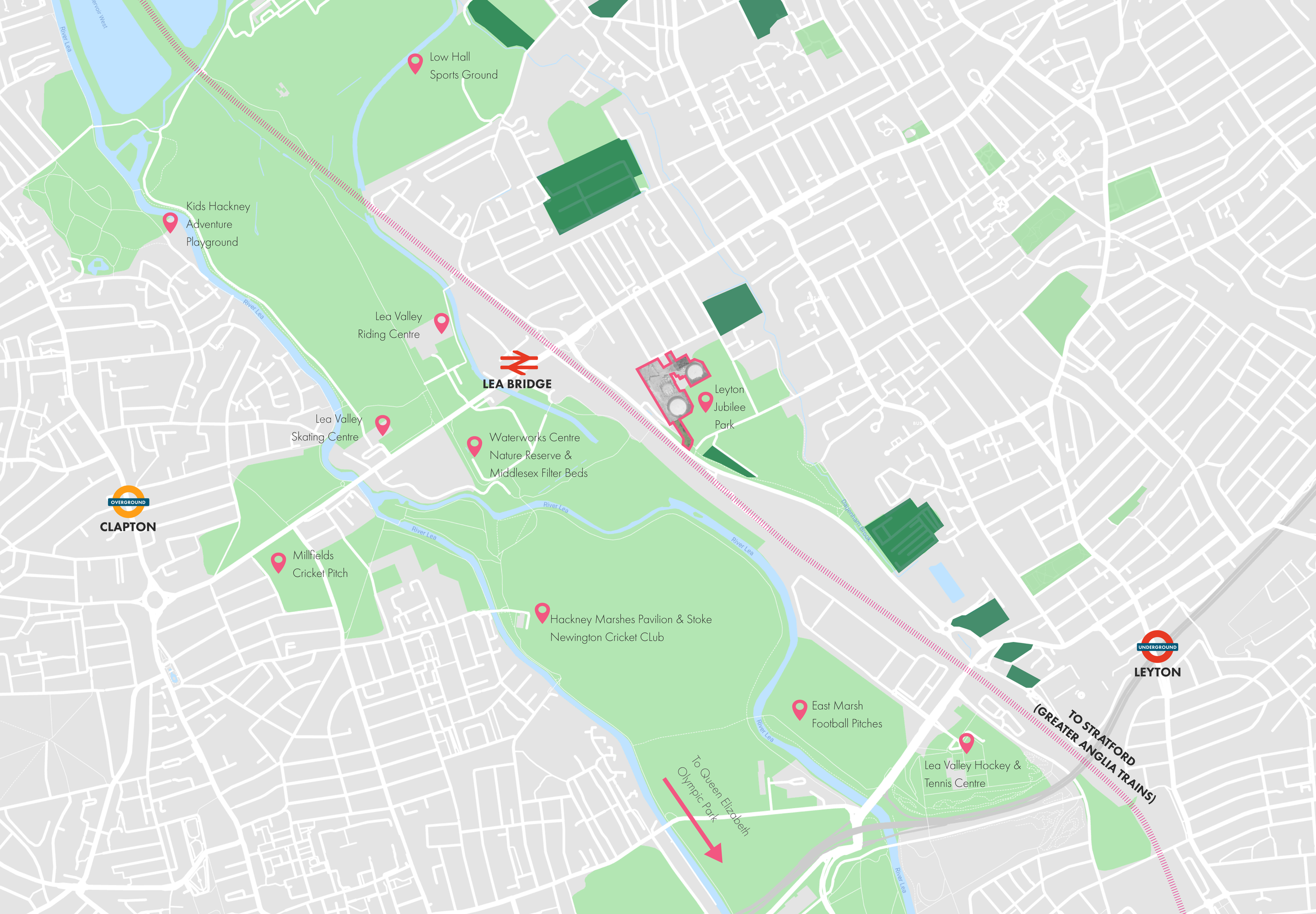
Local Context
The local area is generally low-rise residential with various amenities and some light industry/warehouses. The area has seen new residential towers and higher development with the reopening of Lea Bridge train station. The council has encouraged this and has pushed for development of brownfield sites to be higher density, building taller structures towards the valley. This is a welcomed policy by contractors and home builders but requires careful consideration of the nearby Clementina estate.
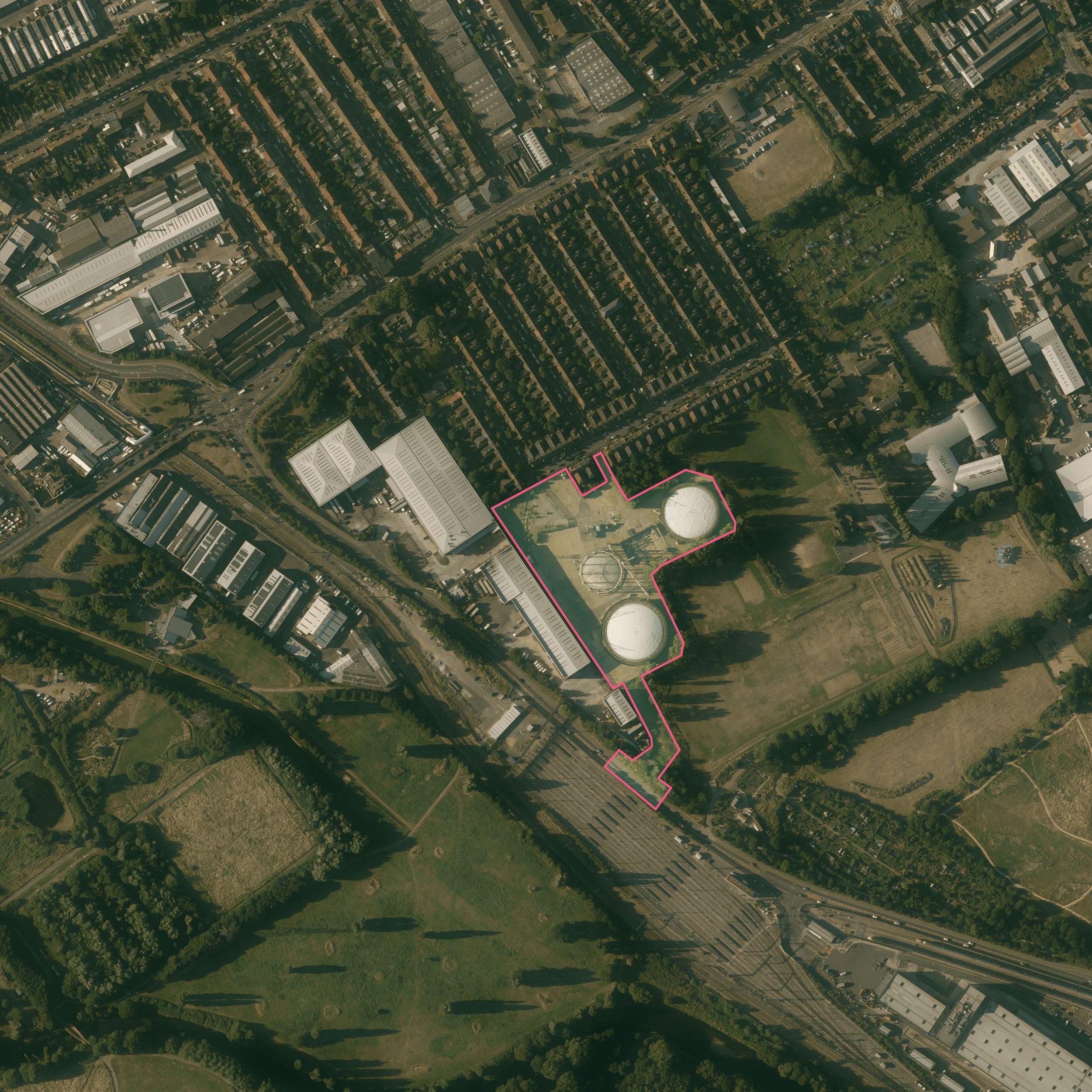
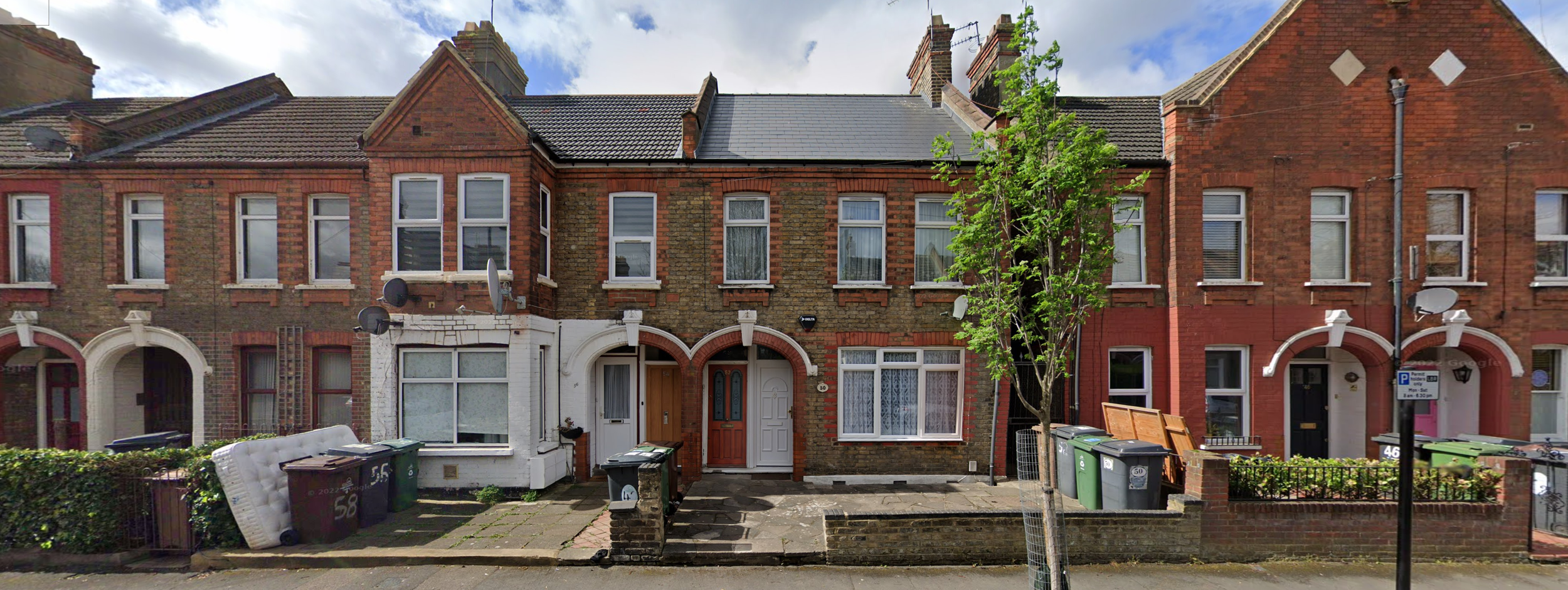
Clementina Estate
Concept
-
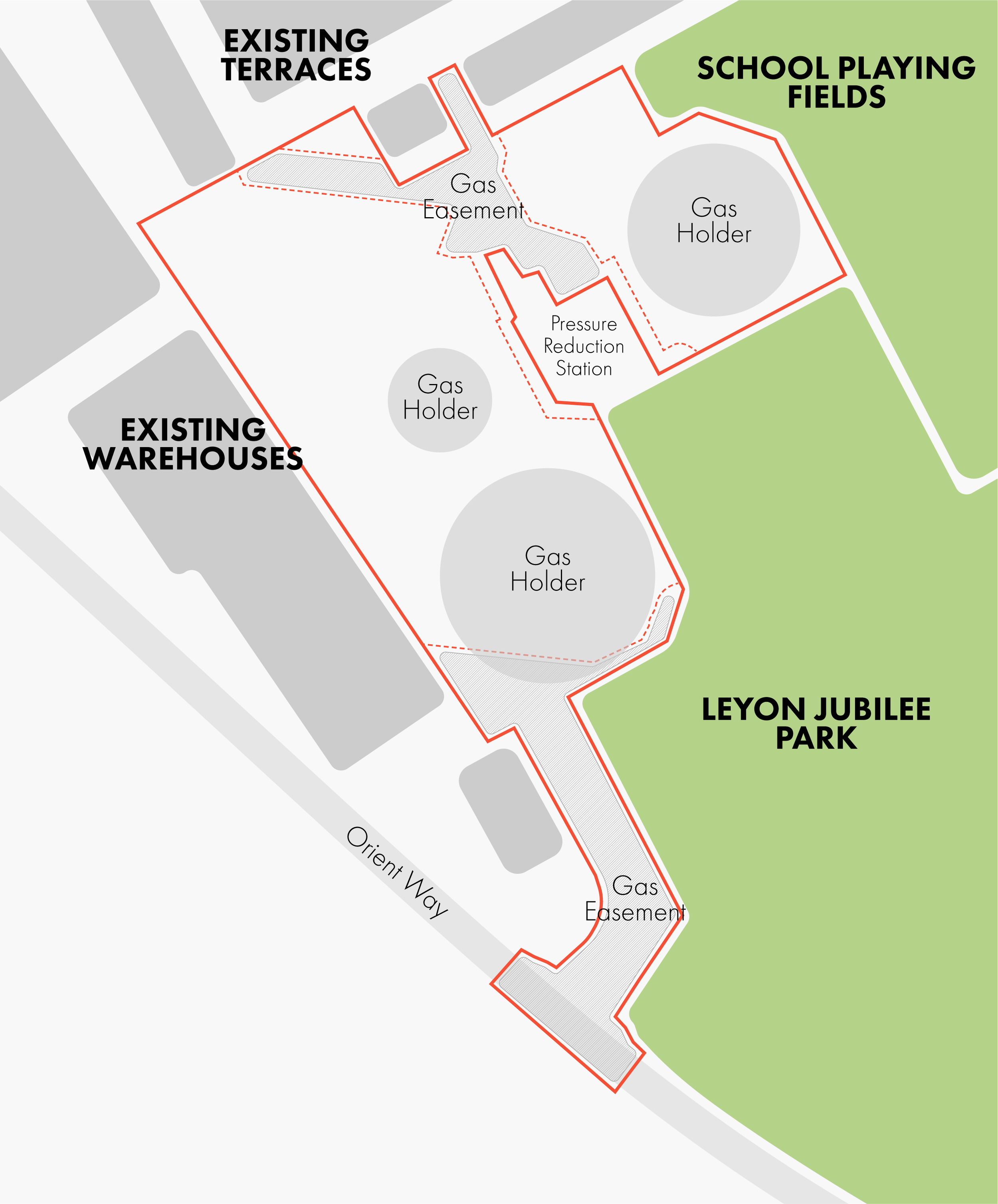
Existing Site
The existing site has a lot of challenges including gas easements and restoring of the brownfield site to make it safe for residents. It also has plenty of opportunities with green spaces to its south that can be connected to the residential homes of Clementina estate in the north.
-
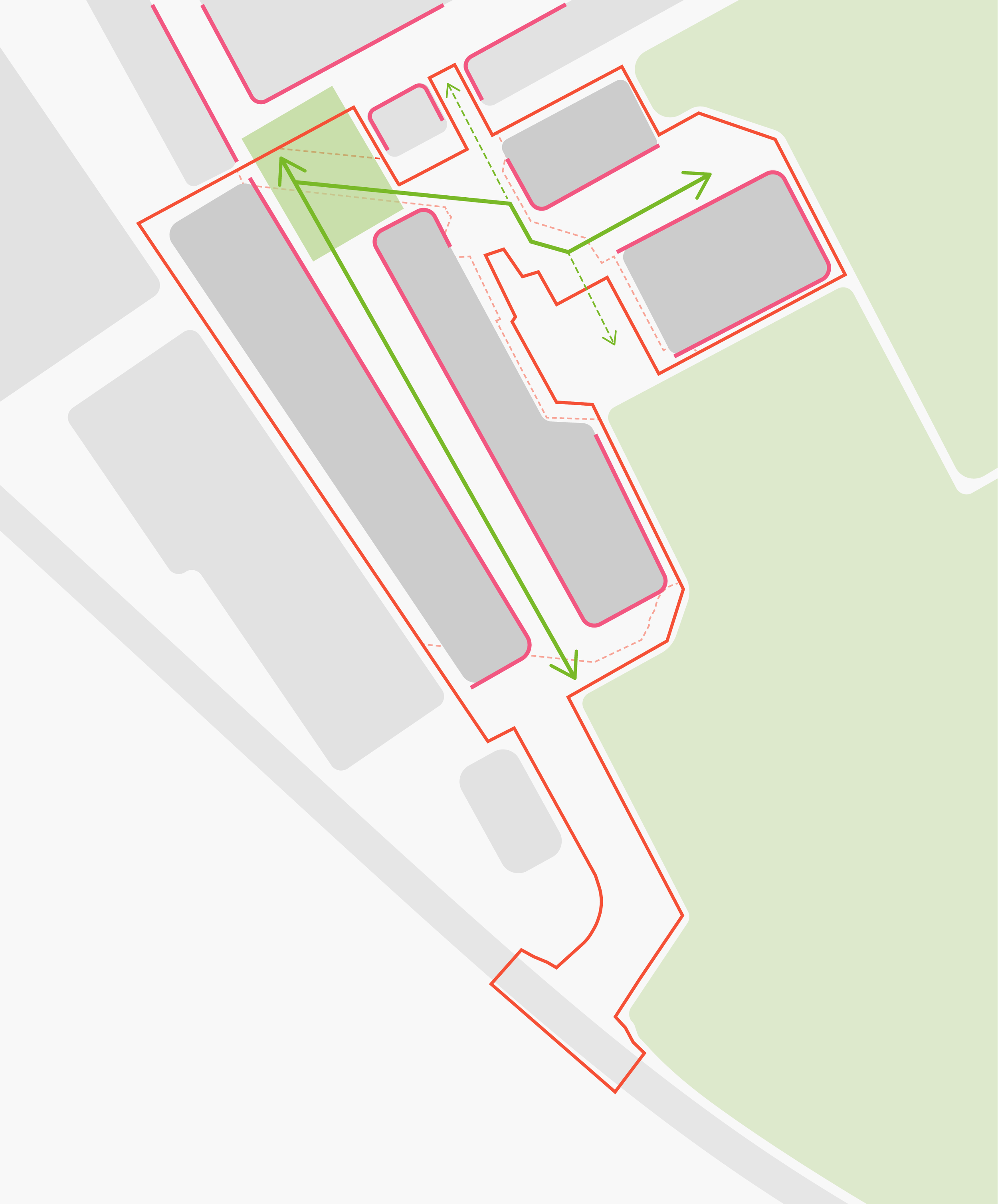
Primary Routes
The primary routes provide cycle and pedestrian access to the site and beyond into the park. It provides a clear axis to the design and makes clear the primary frontages of the site and nearby residential areas.
-
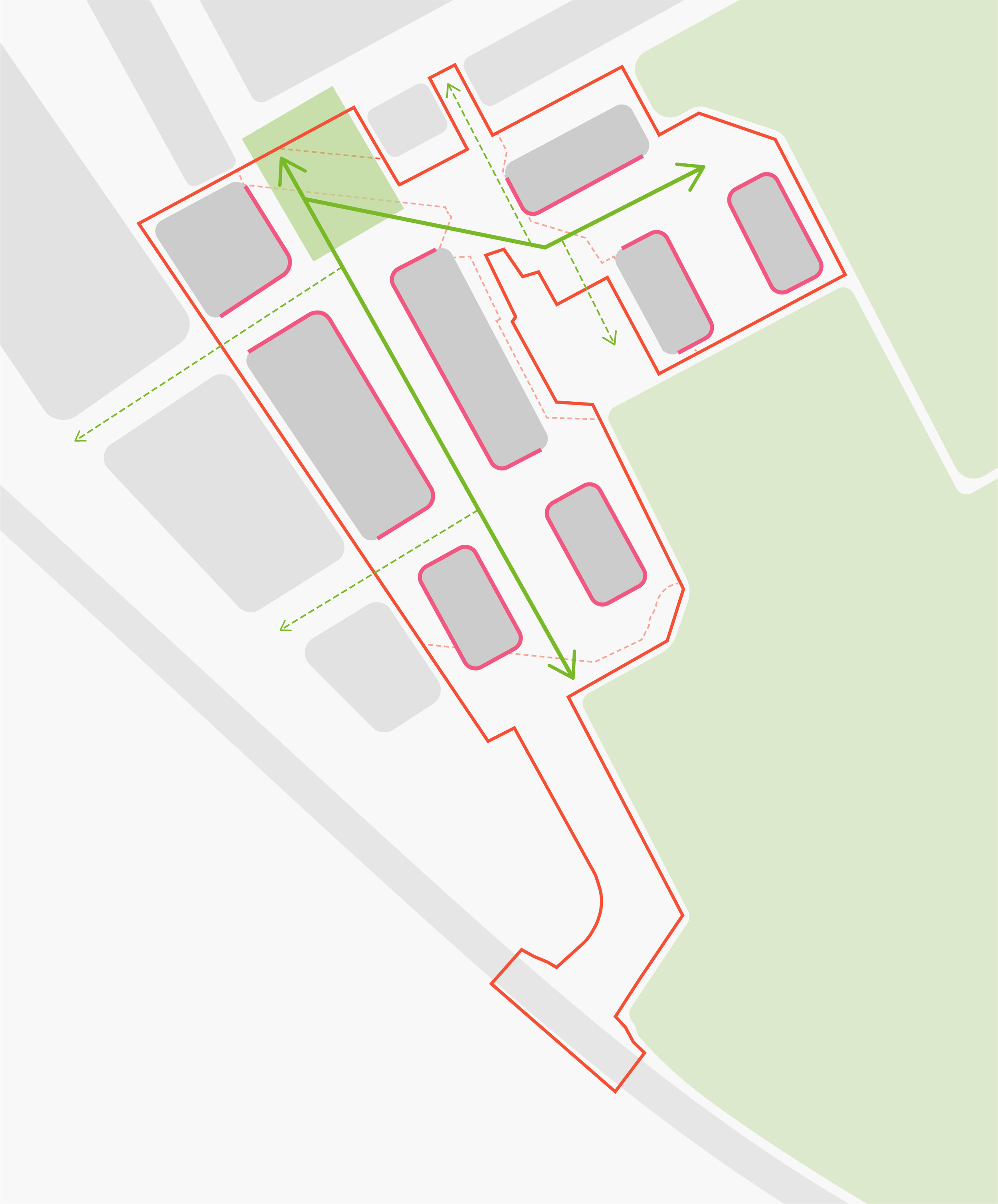
Secondary Routes
Building off of the councils existing masterplans for the Lee Valley, the project considers that the adjacent site also has scope for residential redevelopment. This helps define the secondary routes which further subdivide the building space.
-
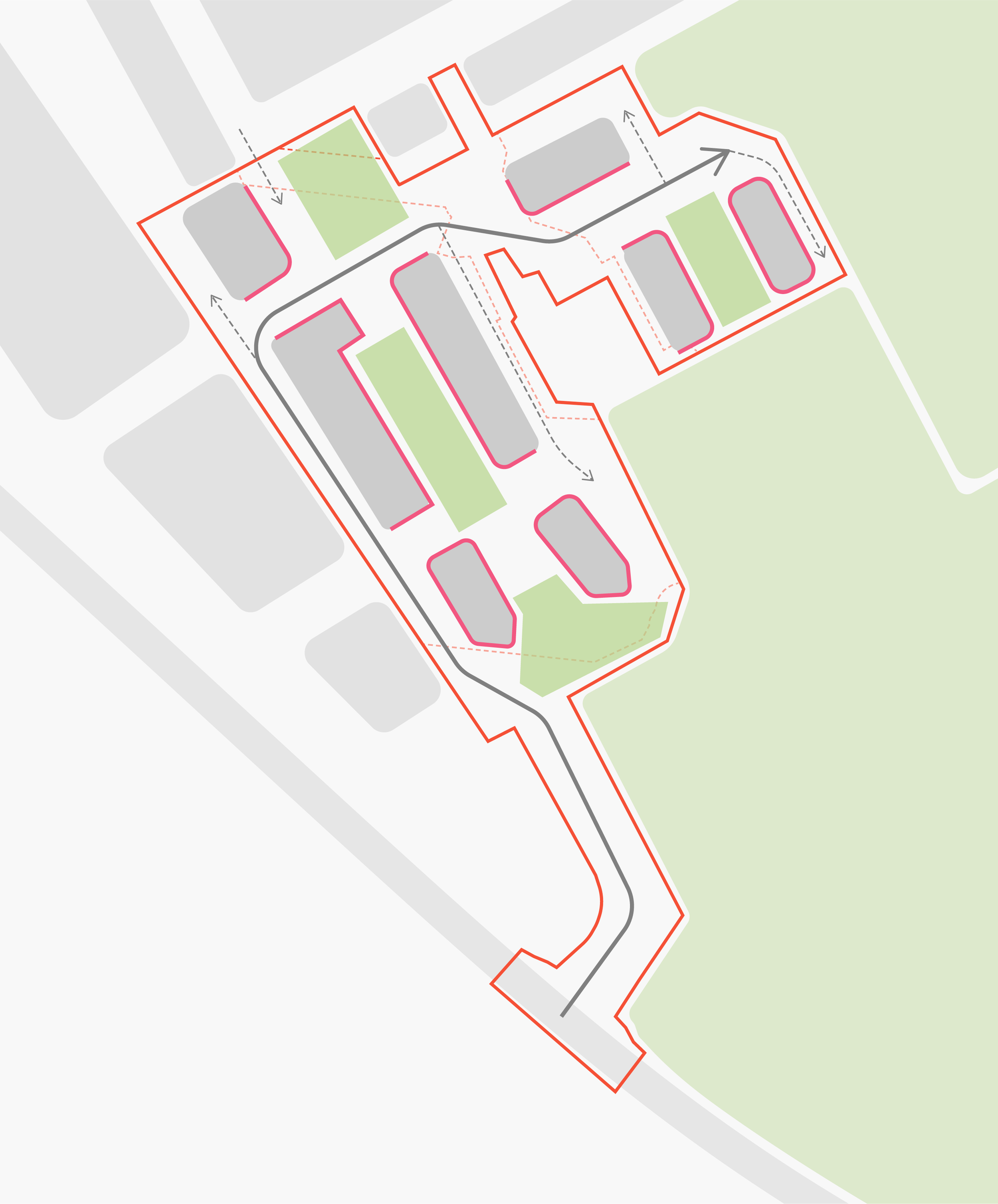
Vehicle Access & Green Spaces
Although cars take a secondary role to cycling and walking in this scheme, emergency services and disabled residents require road access to the site. The green spaces are designed to open up the project to the adjacent park and offset the high density of the design with high-quality greeny. These two elements create the final locations of the blocks.
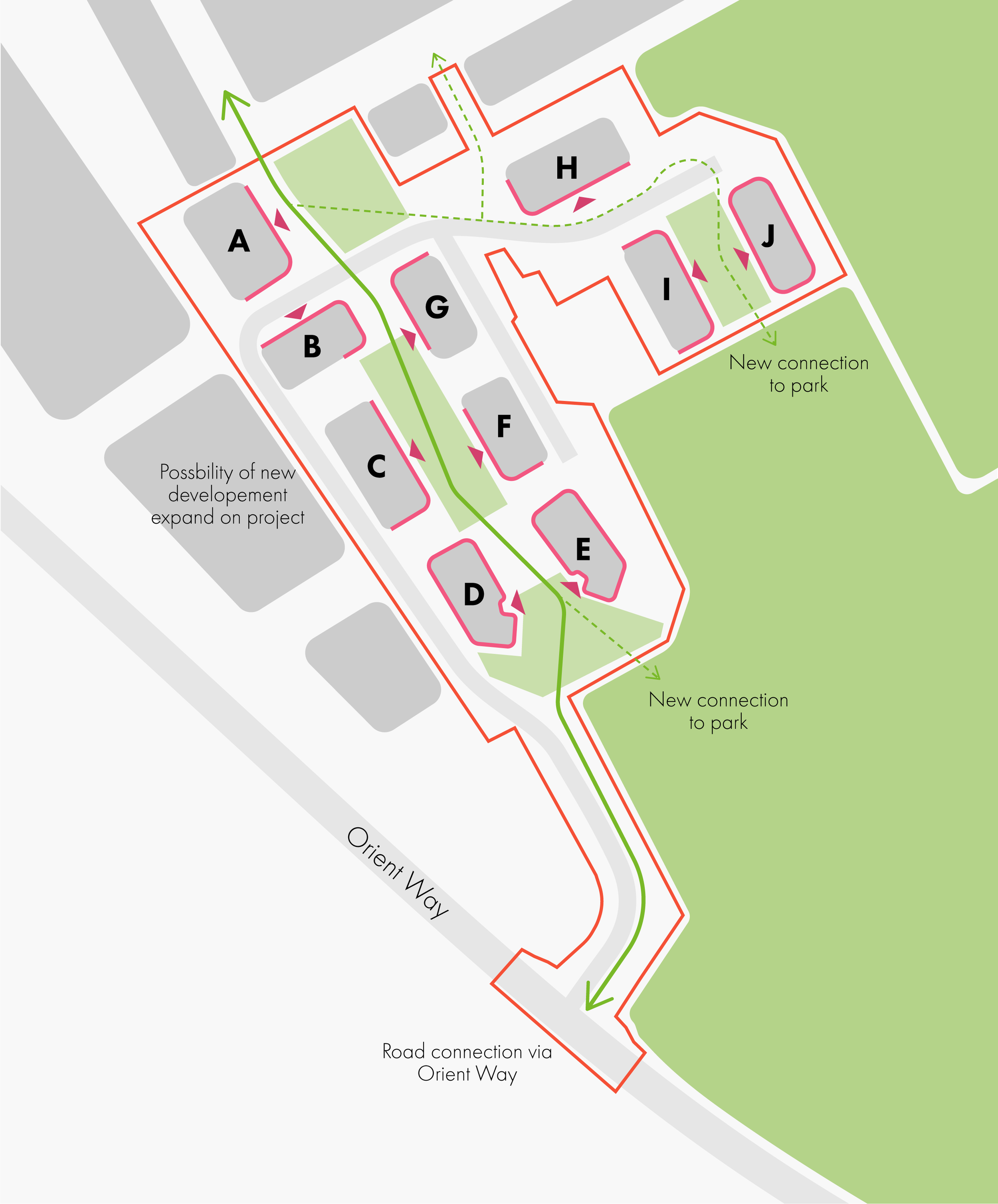
Final Concept
The blocks are rationalised to enable repeating floor plans between blocks and optimised to offer as many homes as possible per building core. This produced the final design with all the important facades highlighted.
The heights of these blocks slowly rise up from the north to south, providing a more gentle transition to the existing terraces.
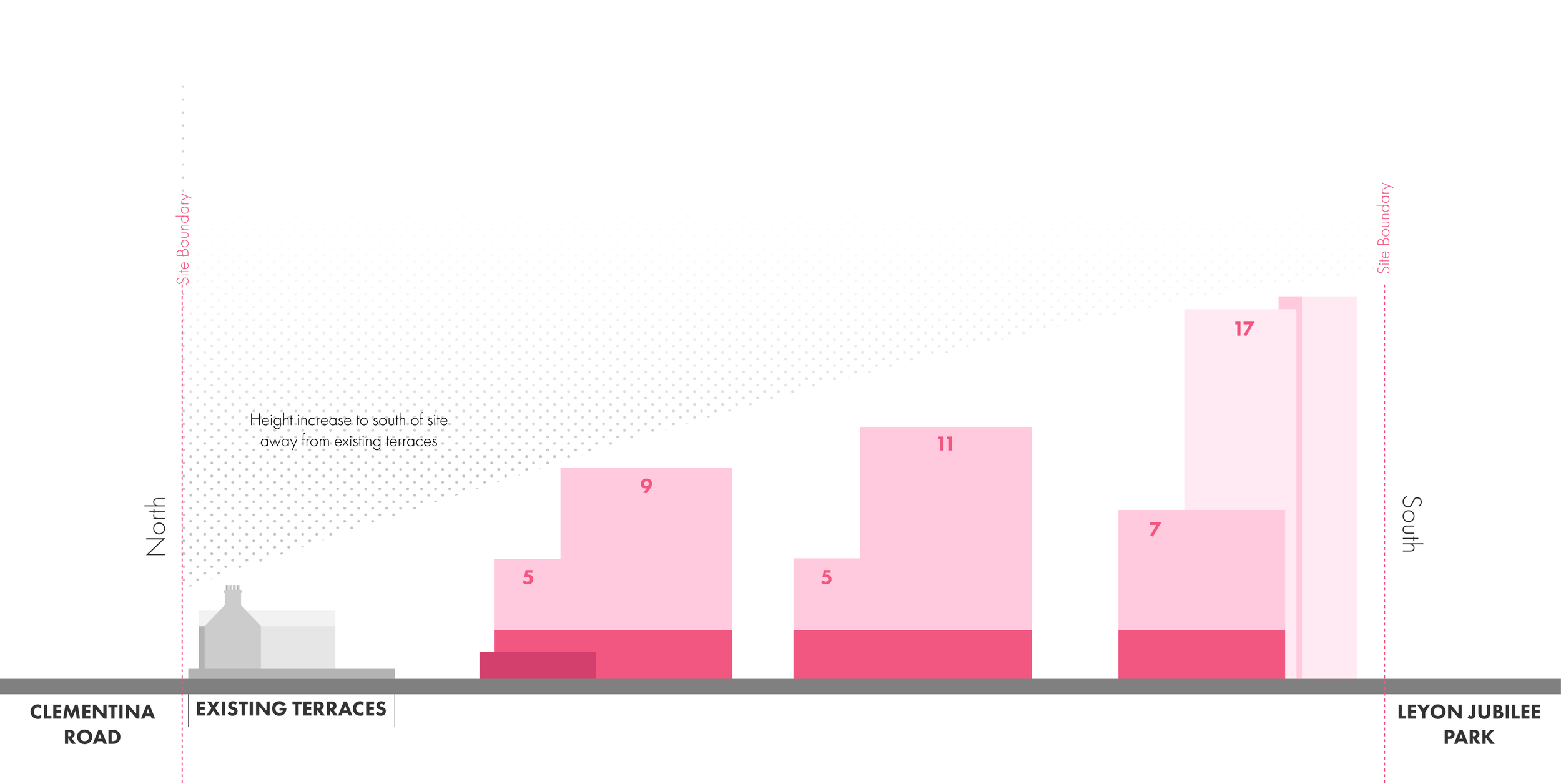
Proposal
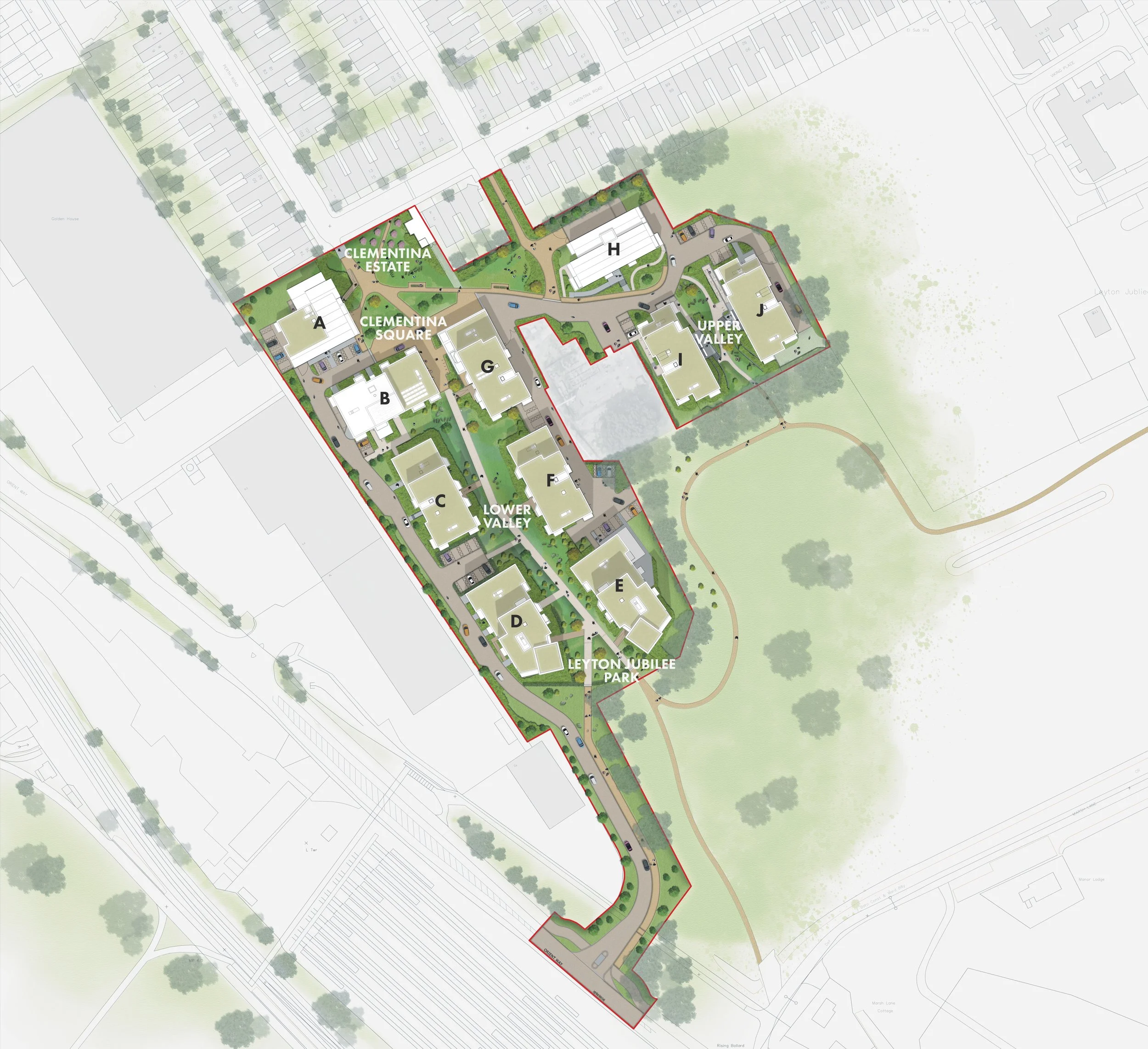
Plan
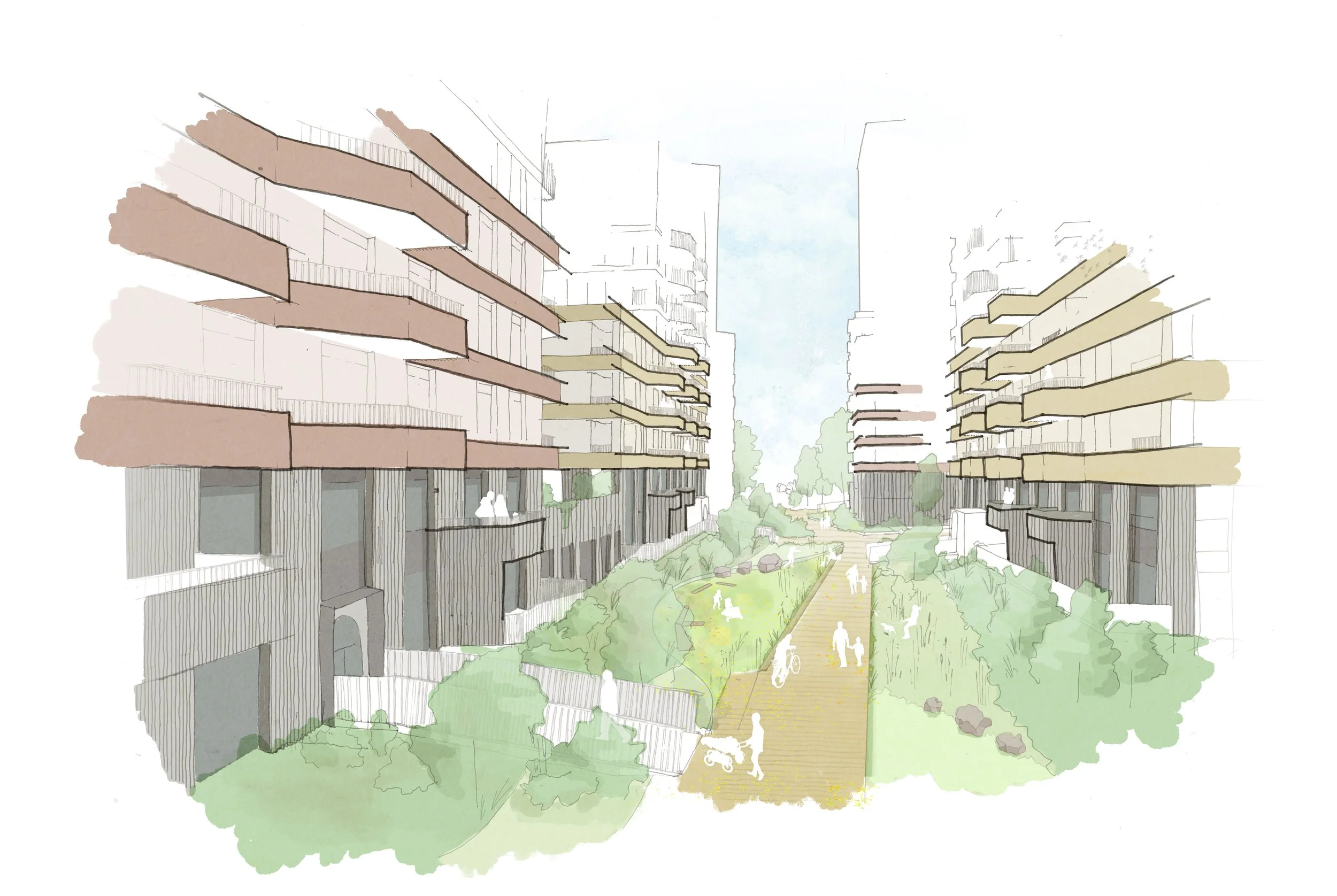
The final proposal is a series of blocks situated in a lush landscape of various different styles forming character areas. Pedestrian and cyclist paths are prioritised and centred with vehicle access provided for just drop-off, disabled users and emergency services. The result is a design that improves the overall environmental quality of the area despite the introduction of 500 new homes.
The design of each block is designed to frame and complement each of the different landscape character areas. At the north of the site, the blocks reflect Clementina estate and, to the south, face the park.
The final proposal uses various bricks in bands with matching metal tones to break down the massing into different forms.
Design typologies
To deliver the height proposed in a location such as this the design needed to be high quality and responsive to various contexts surrounding the site. This was facilitated by various design typologies that change throughout the site.
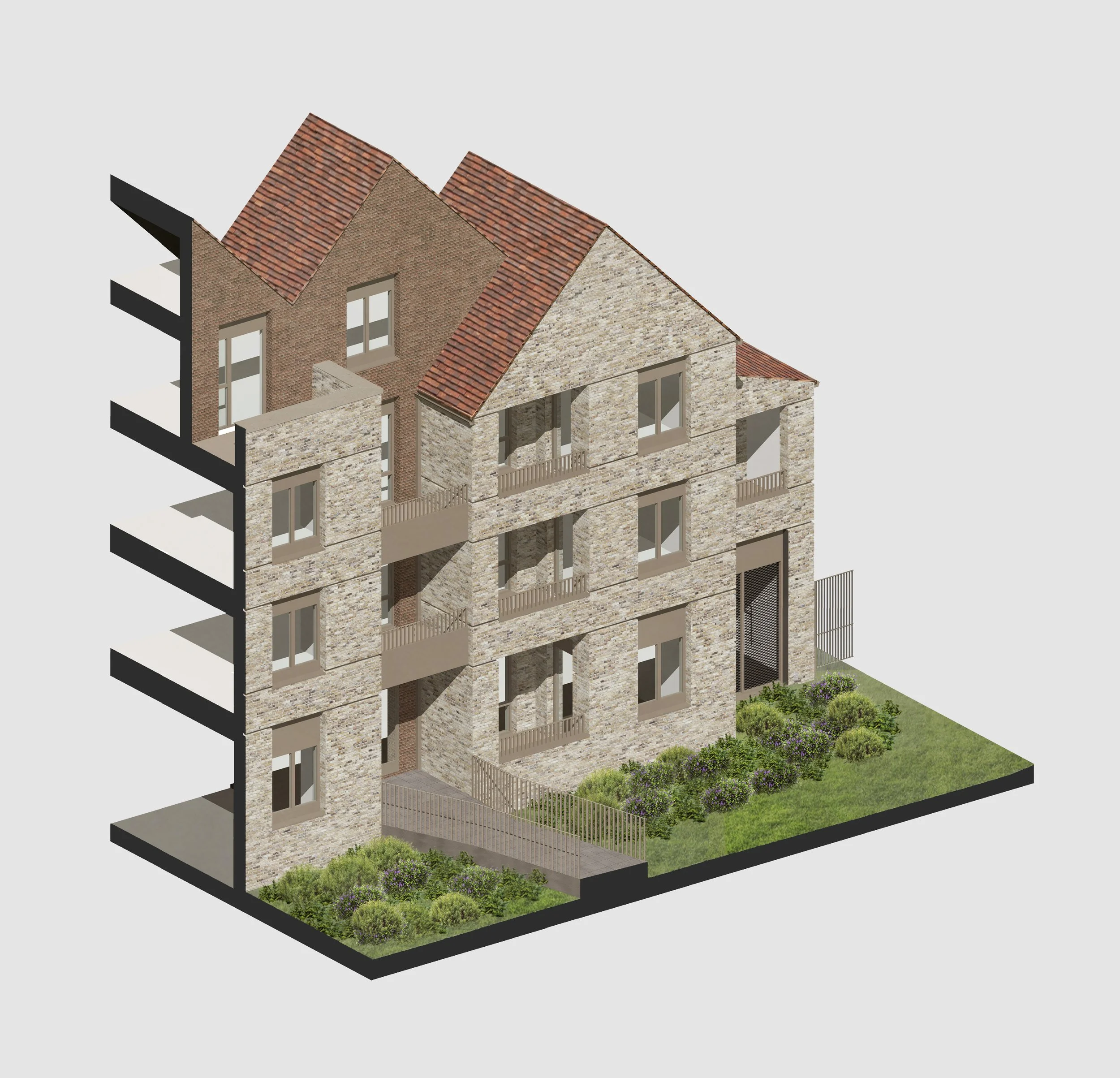
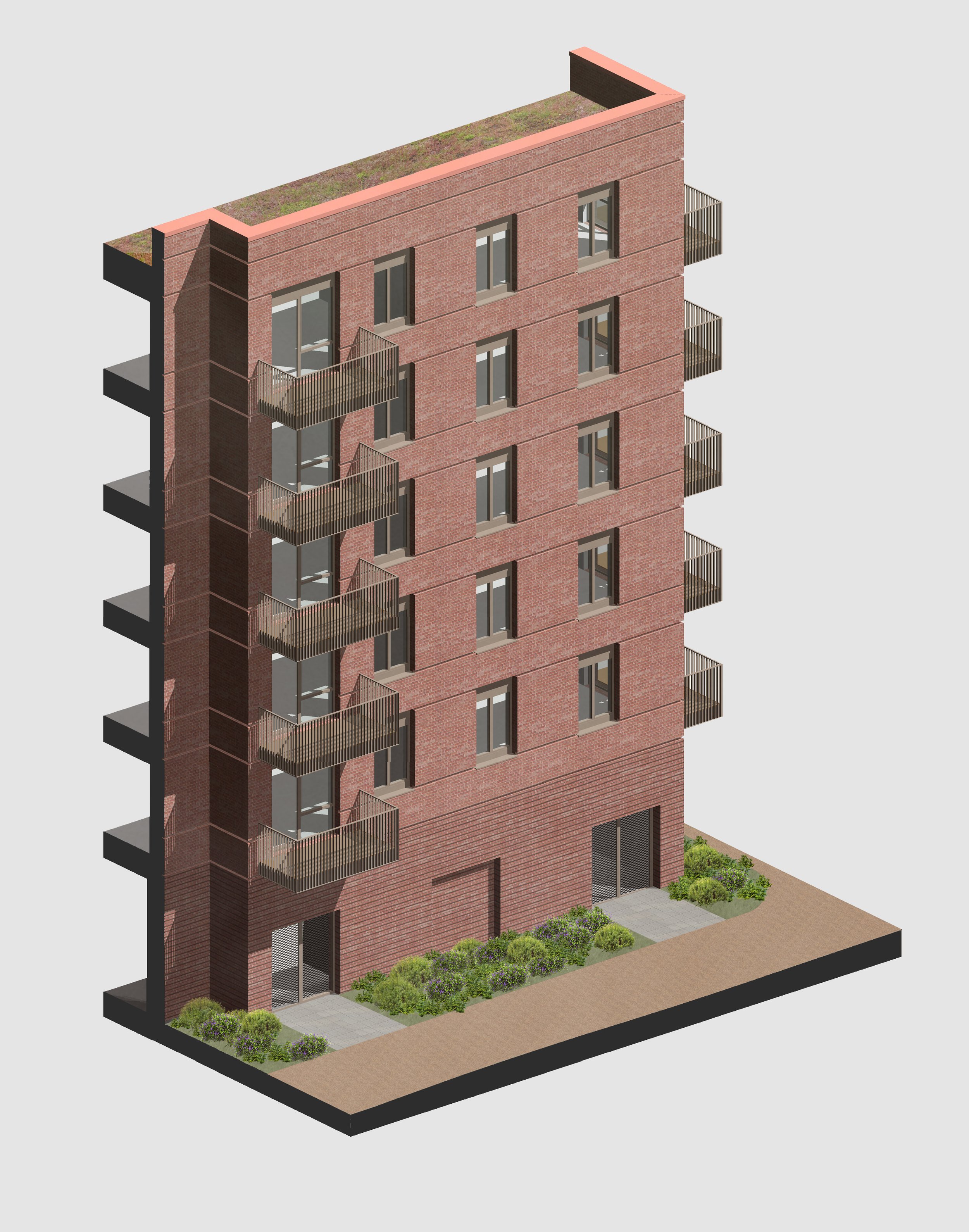
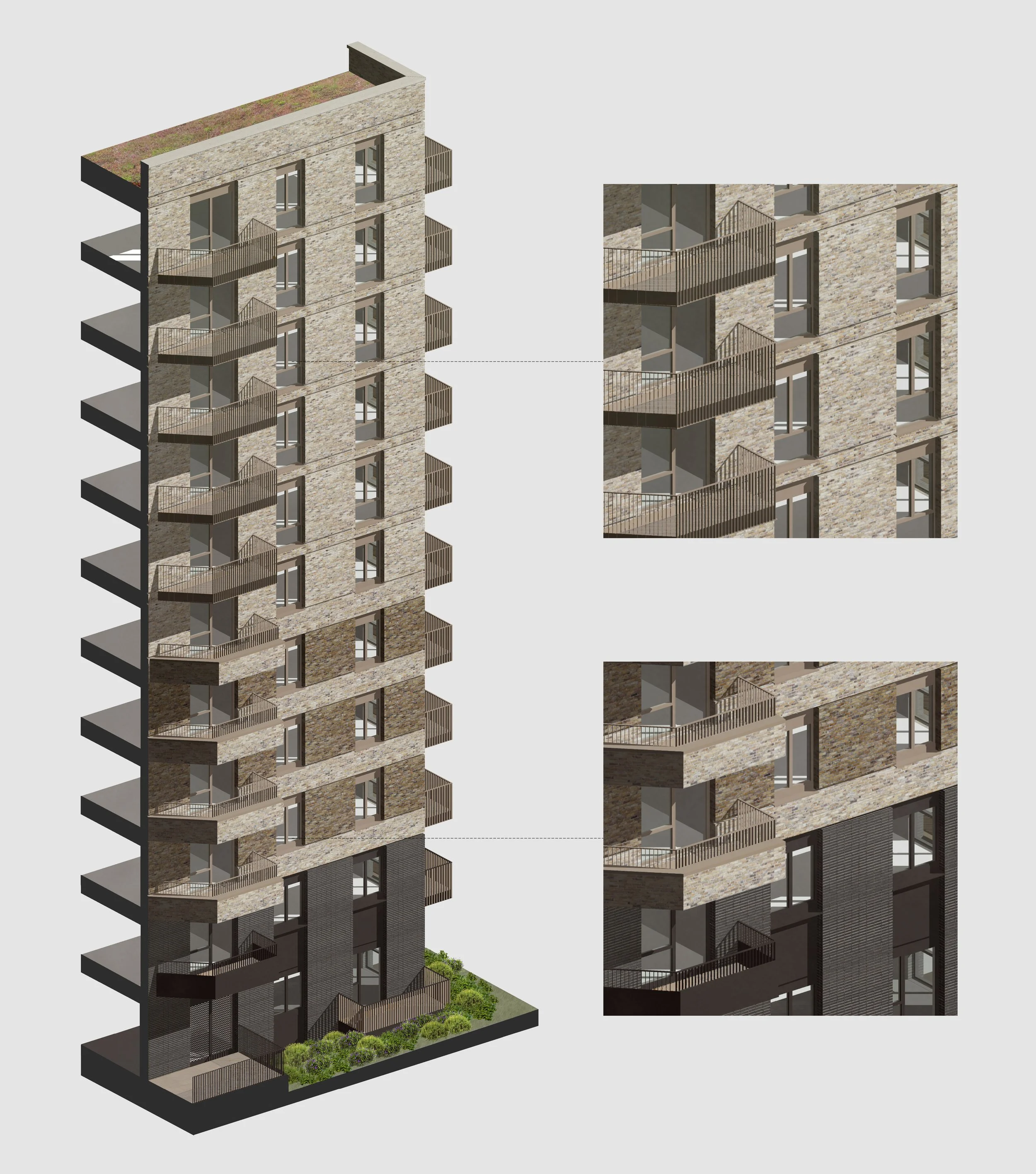
On the project, I helped developed the typologies and produced the following isometric diagrams used to explain these typologies. They were produced from a Revit model with post-production work in photoshop.
Clementina Estate Adjacent
Block A (shown here) & block H follow this typology. The buildings here are 3-4 floors and use various gabled roofs to mirror the adjacent estate’s terraces. The banding used throughout the rest of the site is introduced here with inset bricks forming the line between each band. The form of the buildings reflect the domestic scale of the terraces but are still flat blocks with private balconies.
Clementina Square
Block B follows this typology. Slightly taller, this style moves to the flat roofs used throughout the rest of the site and establishes how buildings are segmented by height. Block B’s ground floor uses projections every other row of bricks adding visual weight to the bottom of the building.
Lower Valley
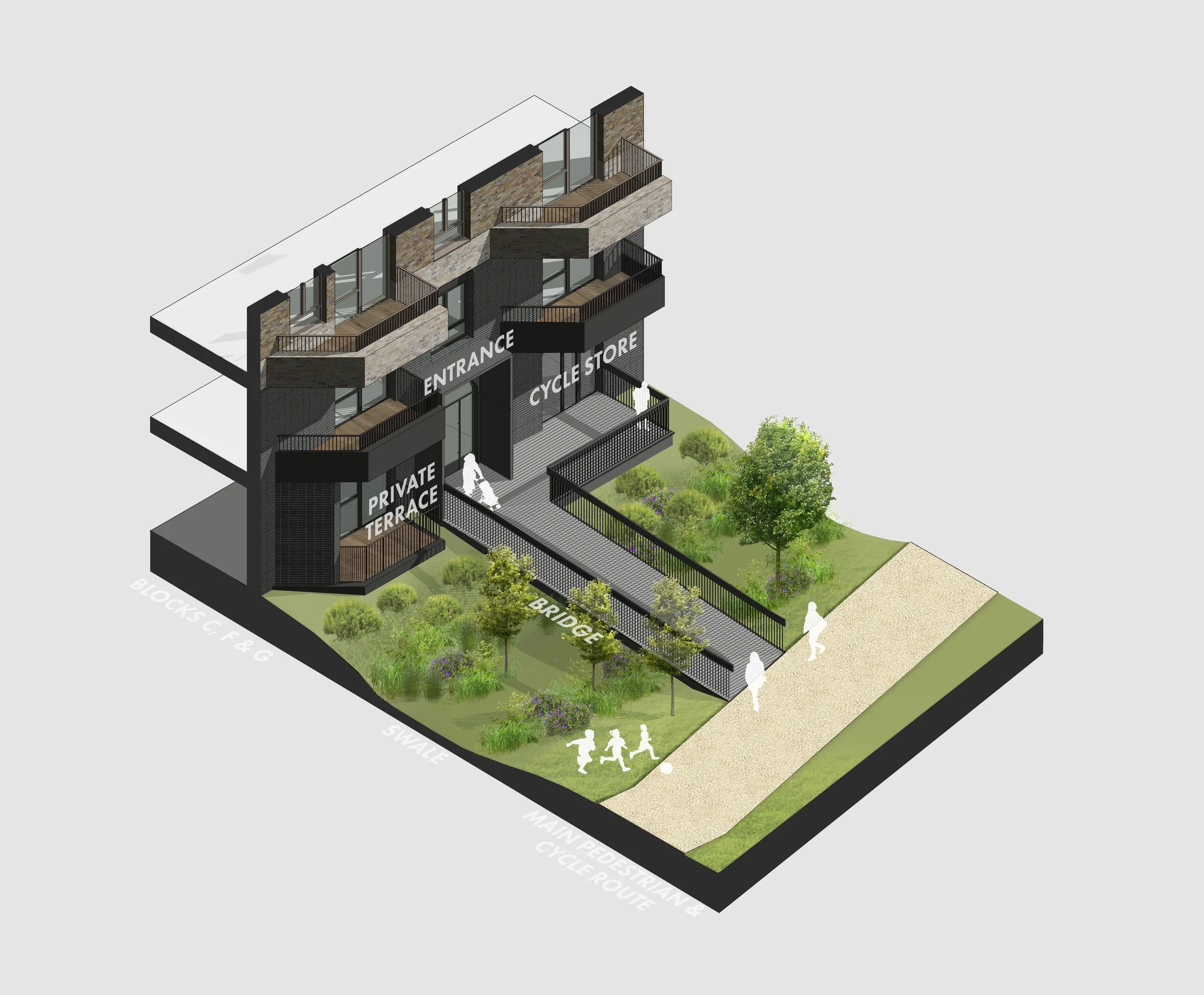
Blocks C, F & G, as well as half of blocks D & E, use this typology. It is designed carefully to work harmoniously with the lower valley, the linear park through the site with informal woodland style planting and swales to absorb water and produce a wetland appearance. The design is divided into three distant sections that being lighter as you move up.
The two bottom levels form a plinth for each block that frame the gardens with vertical banding in dark materials. The black stacked brickwork and matching black metalwork are used by all the blocks and form a consistent formal and modern backdrop to the gardens. This provides a strong visual foundation for each of the blocks.
In the next section, thick horizontal bands switch between two different bricks - each block has its own pairing. The chamfered balconies are open on their southern side, directing views down the valley towards Leyton Jubilee Park, and are formed by the bands peeling off the building. The metalwork in this section is bronze coloured to reflect the lighter brickwork.
The final section only appears on the taller section of blocks C, F & G. Here the blocks become monotone blocks of the lighter brick selection, the banding is narrowed and only visible through the insets between each band. the windows are larger and the balconies are reduced to only metal work. This section’s appearance is the lightest and also uses bronze-coloured metalwork.
Leyton Jubilee Park
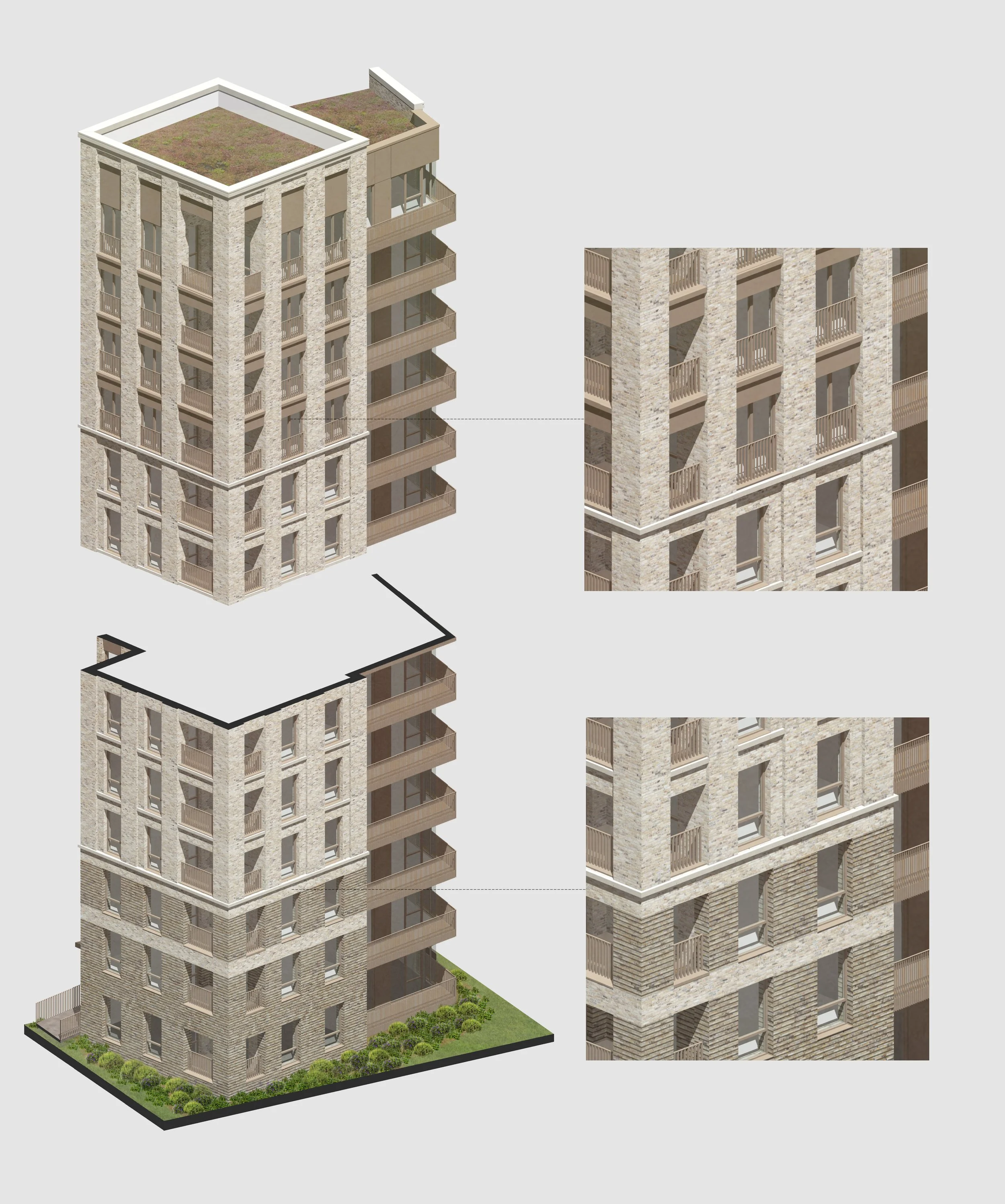
This typology is used for the sections of blocks D & E closest to Leyton Jubilee Park. Designed to face the park, the style embraces the height of the southern 2 blocks and is the furthest from the domestic scale and brick tones of Clementina estate to the north. The ‘towers‘ are split into 3 sections using a new lighter brick as well as concrete bands. The park-facing section adjacent to the towers uses metal panelling.
The base of the towers starts with every other row of bricks inset and no vertical banding and windows appear to sit in a thick solid foundation of brick. The section is capped with the first concrete banding.
The next section is the largest of the three with the vertical banding starting here. On each floor, concrete cills sit between the vertical brickwork forming an inset frame around each window. These frames contribute to the overall lighter appearance of this section. The actual windows remain the same size but the openings on each balcony get larger. This section is also capped with a concrete band
The final section is similar in form to the dark base of the lower valley typology but uses only the lightest bricks. The design drops the brickwork and concrete between levels, with metalwork instead, and the windows get wider to become juliet balconies filling the entire inset section. This leaves only the vertical and makes for a visually light crown to the tower.
Upper Valley
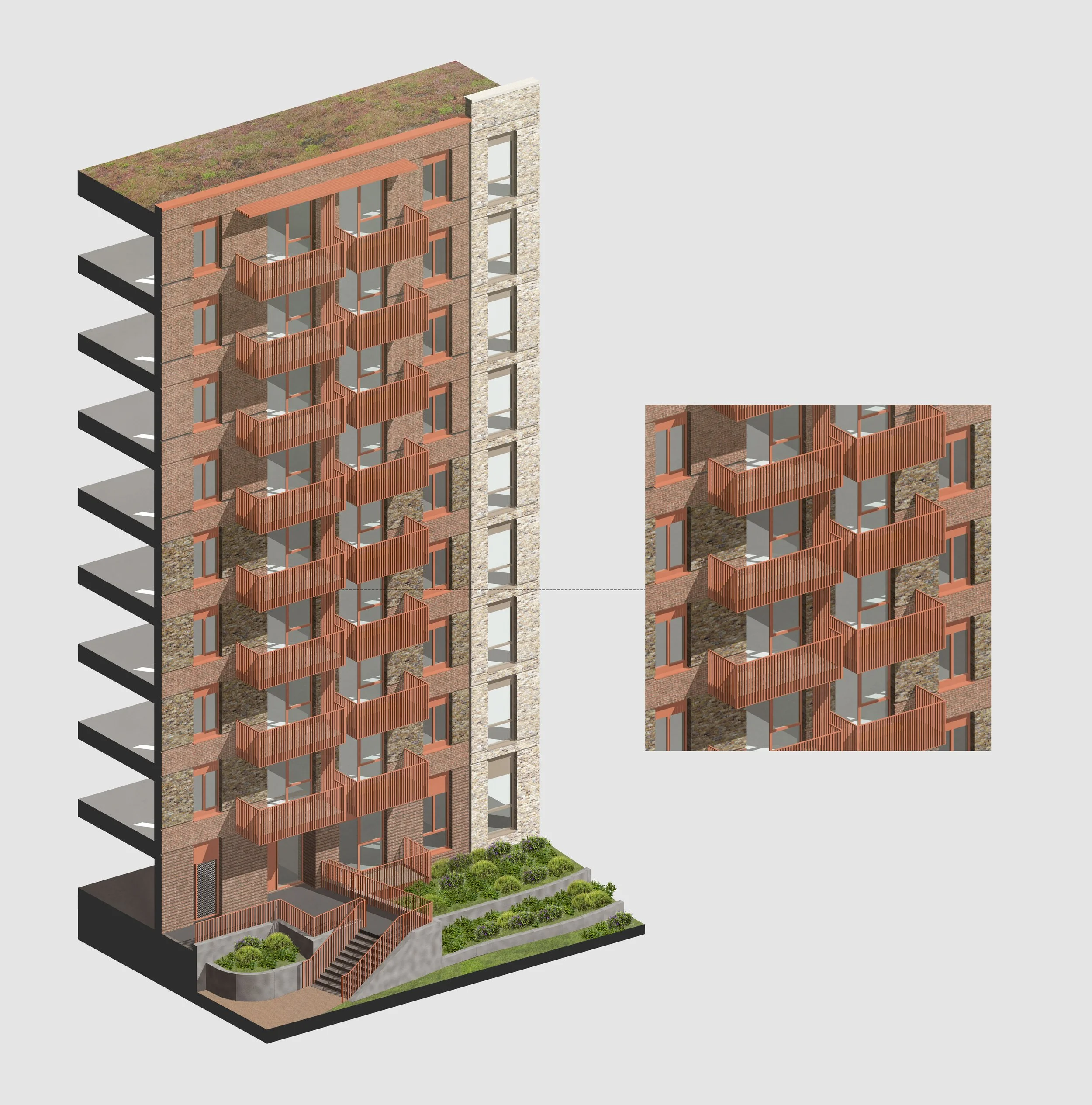
This typology is a mixture of existing typologies and is used for blocks I & J. The northern half of each building uses similar banding to the lower valley, with 3 sections of banded brickwork that simplify the higher up the buildings. The northern halves also include bright red/orange metalwork and the balconies with screening to provide privacy from adjacent flats. The southern, park facing, half of each building borrows from the towers. It uses larger bronze-coloured windows, lighter bricks, and has a taller parapet.
This split design was created to transition between the Leyton Jubilee park and Clementina estate typologies over a condensed distance while providing a unique style to the upper valley.
Design Features
Bespoke design elements were considered an integral part of delivering a high-quality design. Of these design features, I worked with the team to develop the nursery garden & screening, the lower valley bridges, and the lower valley entrances. These features would be highly visible, sitting on the main route through the site, and in the case of the lower valley entrances, occur numerous times along the route.
These were concepts developed in Revit, Sketchup, Rhino and grasshopper. All the diagrams below were produced by myself as part of the planning submission.
Nursery Garden
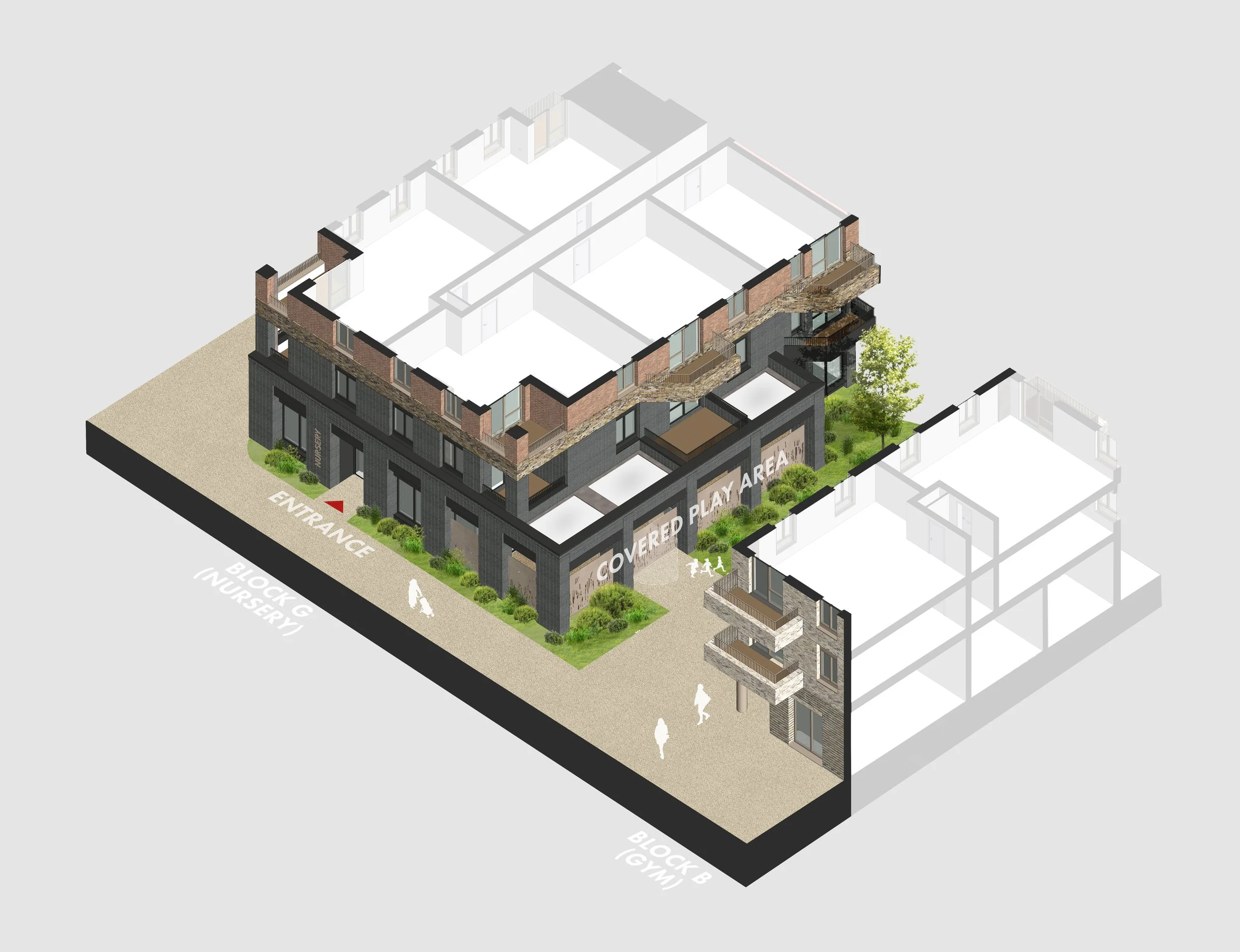
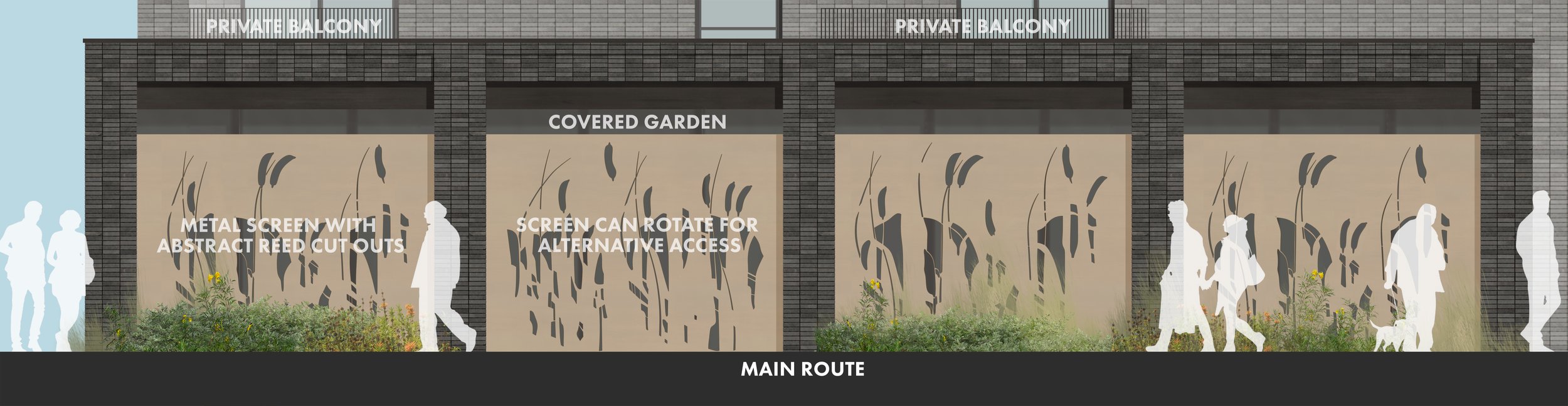
To intergrate the scheme with the existing community in Lea Bridge and to fulfil the need for one in the area, the proposal included a nursery at its centre. Placing it at the centre offers many opportunities to inject sound and life into the space but required the facilitating of private space for kids to play. To do this a colonnade was proposed at the base of block G. The colonnade would enclose the garden with the help of a screen and then continue around the entire nursery using the same dark brick. This would keep it within the plinth logic but mark it clearly as its own entity in the scheme.
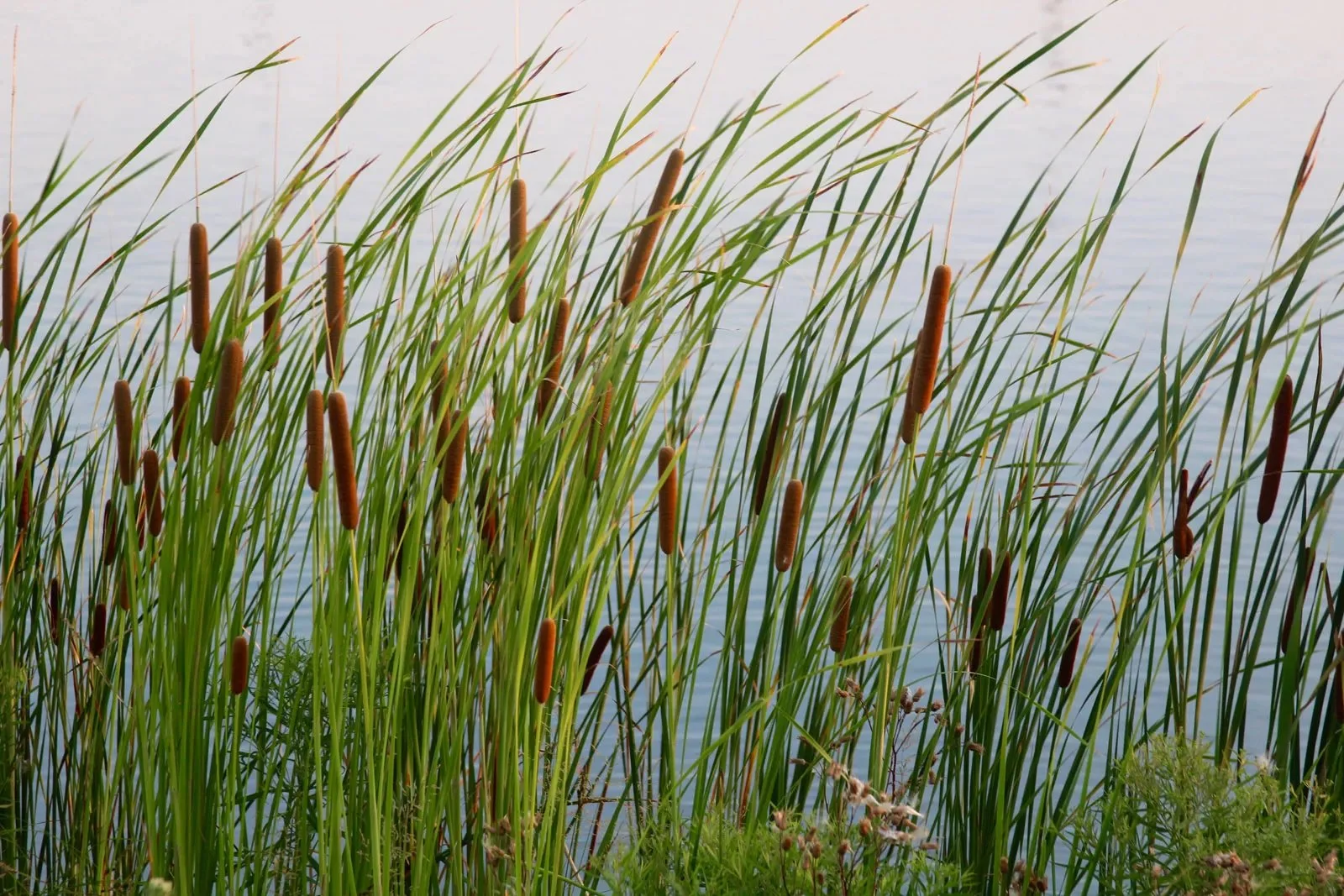
I explored various screen designs from parametric generated grids of different sized circles to reflect the old gasometers in the area to a simple vertical fence, but the proposal the team agreed was best was an abstraction of reeds/marsh landscape.
Lower Valley Bridges
The scheme’s location within the lee valley flood zone requires:
the buildings to have an elevated base above any likely flood level;
the site to incorporate sustainable landscaping.
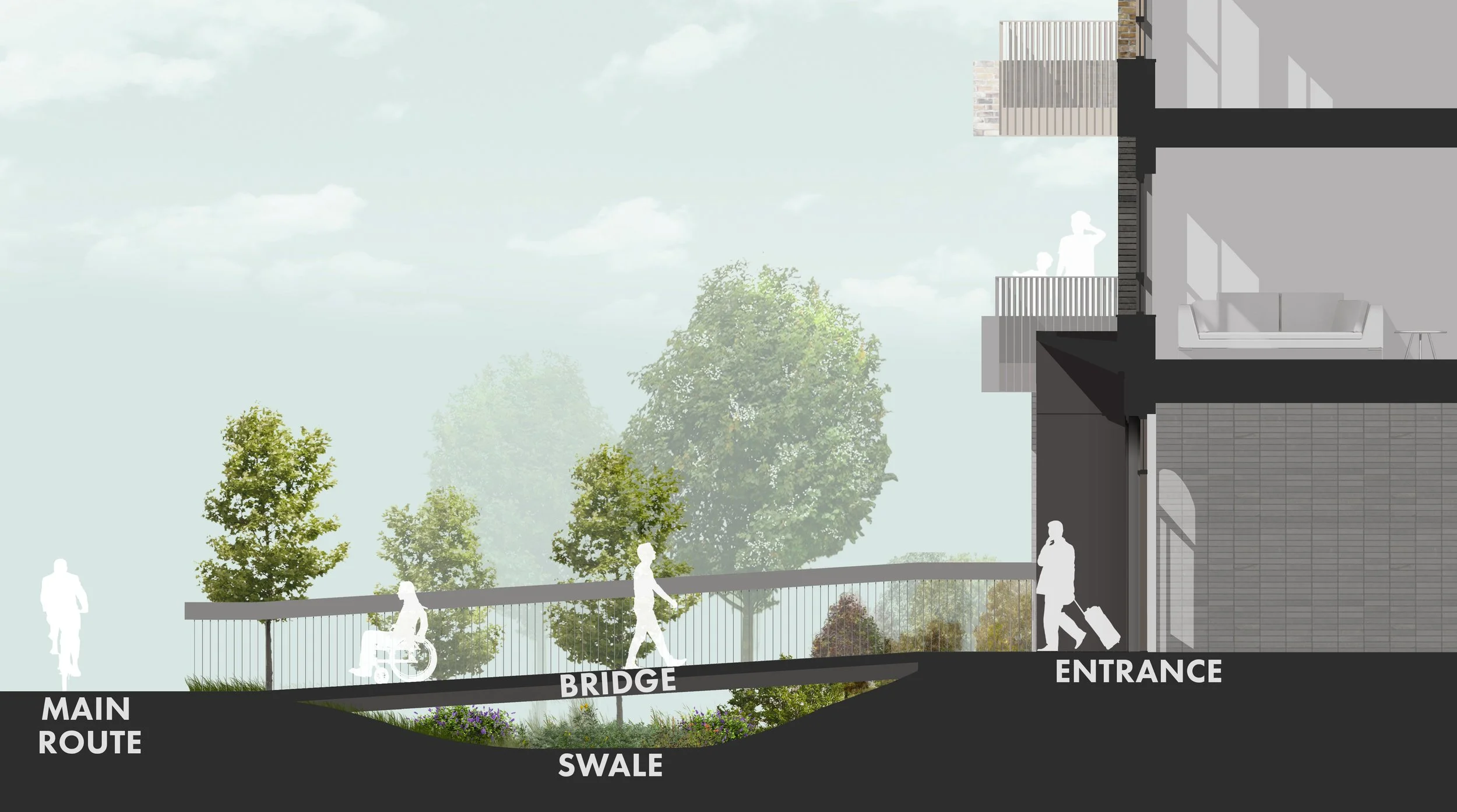
Together, these offered an opportunity. Bridges could provide the difference in height while working in conjunction with swales. These swales would reduce water run-off, by providing trenches with water-friendly planting, and provide a buffer between private terraces and the main path. Hosting the main route through the site, plenty of green space for swales and being the largest section of the scheme, the lower valley was the ideal location to implement these bridges
Given the prominence of these bridges within the landscape, I worked on various design options that explored different railing and floorings. Sticking with darker tones and the vertical elements common in the lower valley typology, the final design uses small frequent upright supports that join a thick, offset, balustrade. This balustrade gives a stronger visual character to the bridge in comparison to the balcony railing. The floor plates would consist of horizontal elements that match up with every upright support. The railing would continue after the bridge to meet up with the entrance and any close-by cycle store entrance.
Lower Valley Entrances
Another part of achieving high-quality design was creating attractive and identifiable entrances. As with the bridges, the lower valley offered the best location to dedicate this additional design consideration.
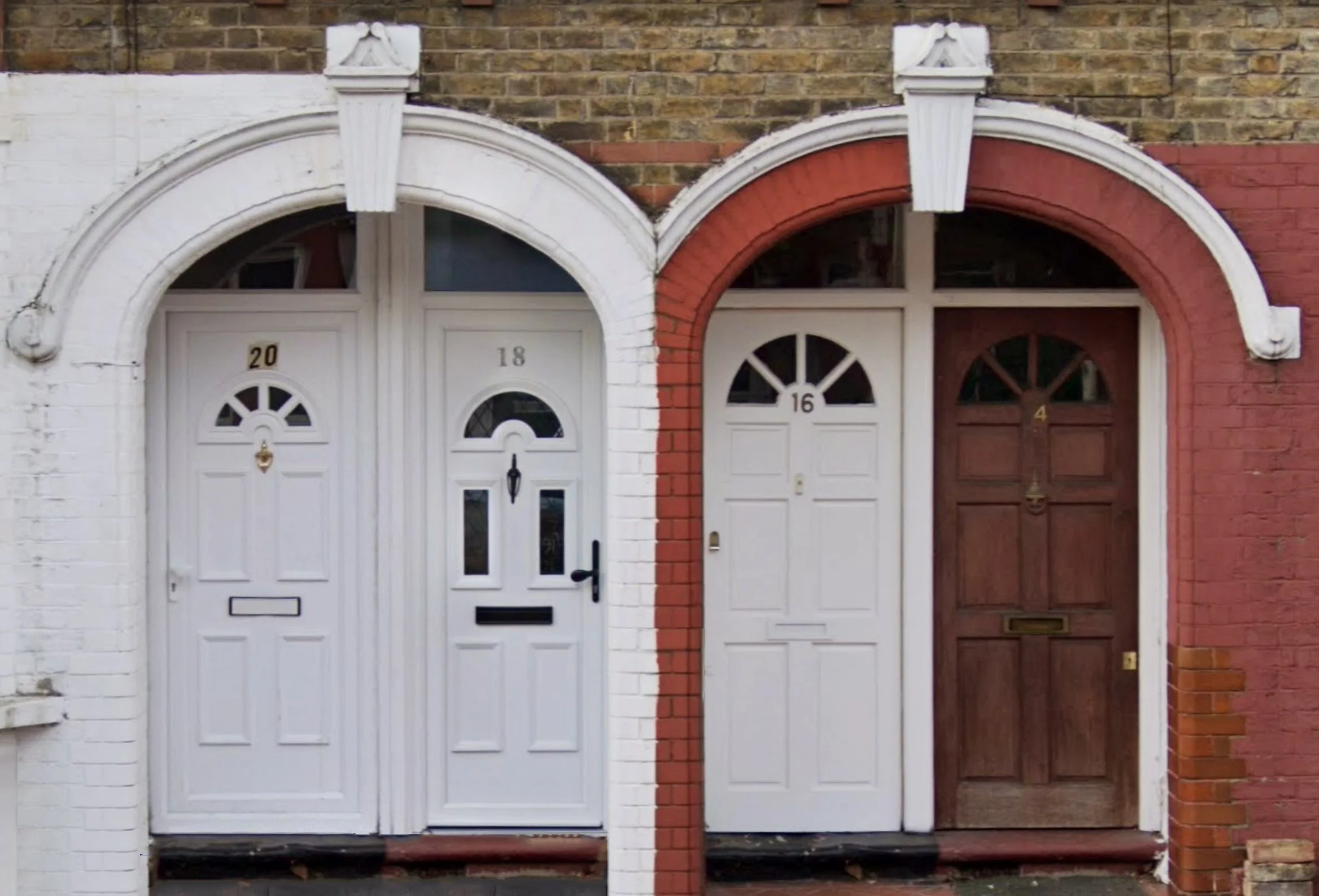
The existing Clementina estate has unique entrances. Although they appear like traditional terraces houses, the ground and first floor are separate flats with the entrances to both, inset within the same arch, This arch is paired with the adjacent ‘terrace’ entrances to form a pair of arches. The final result reduces the visual clutter, keeps each pair of flats tied together and gives the whole estate a recognisable architectural language.
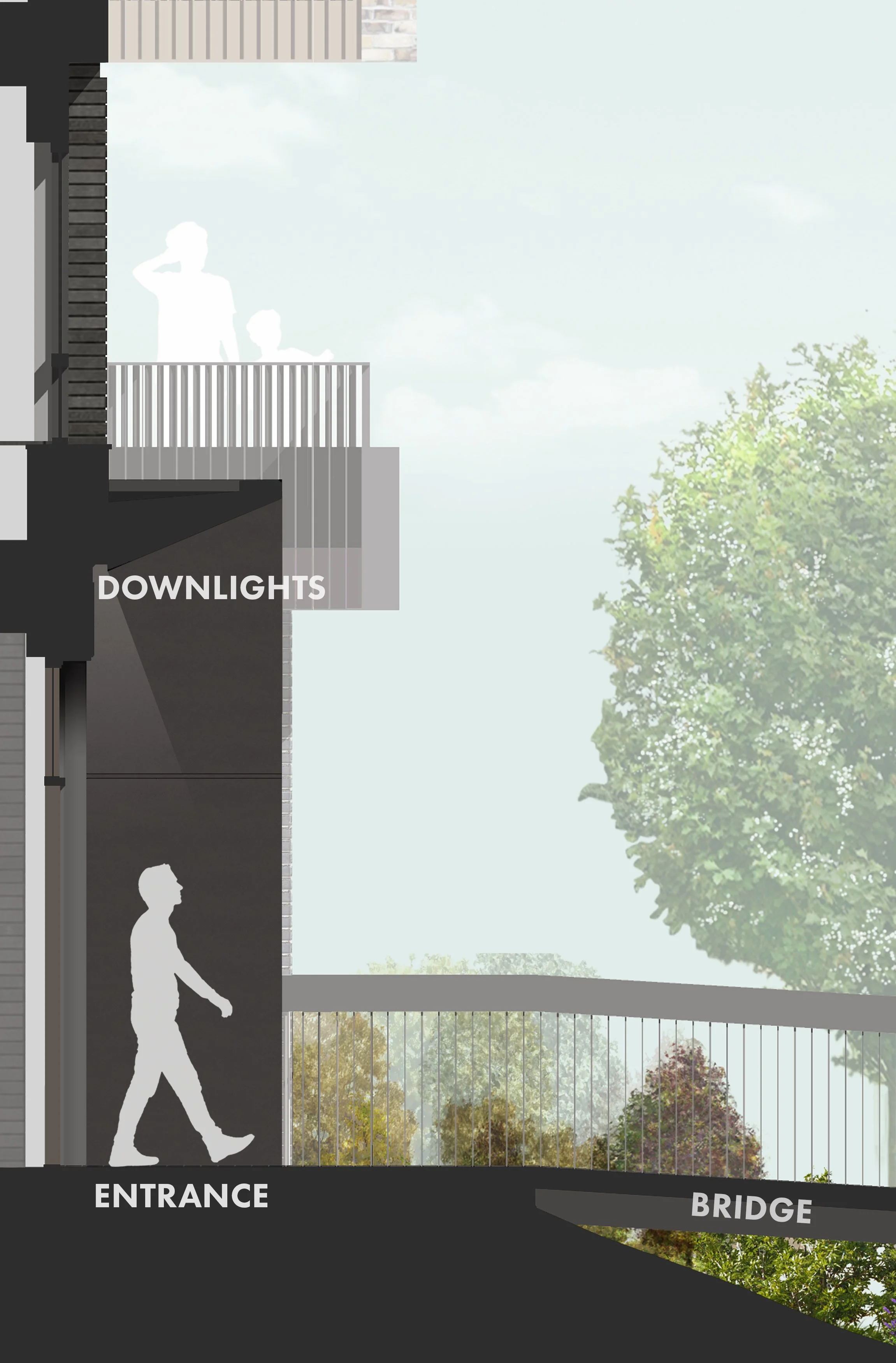
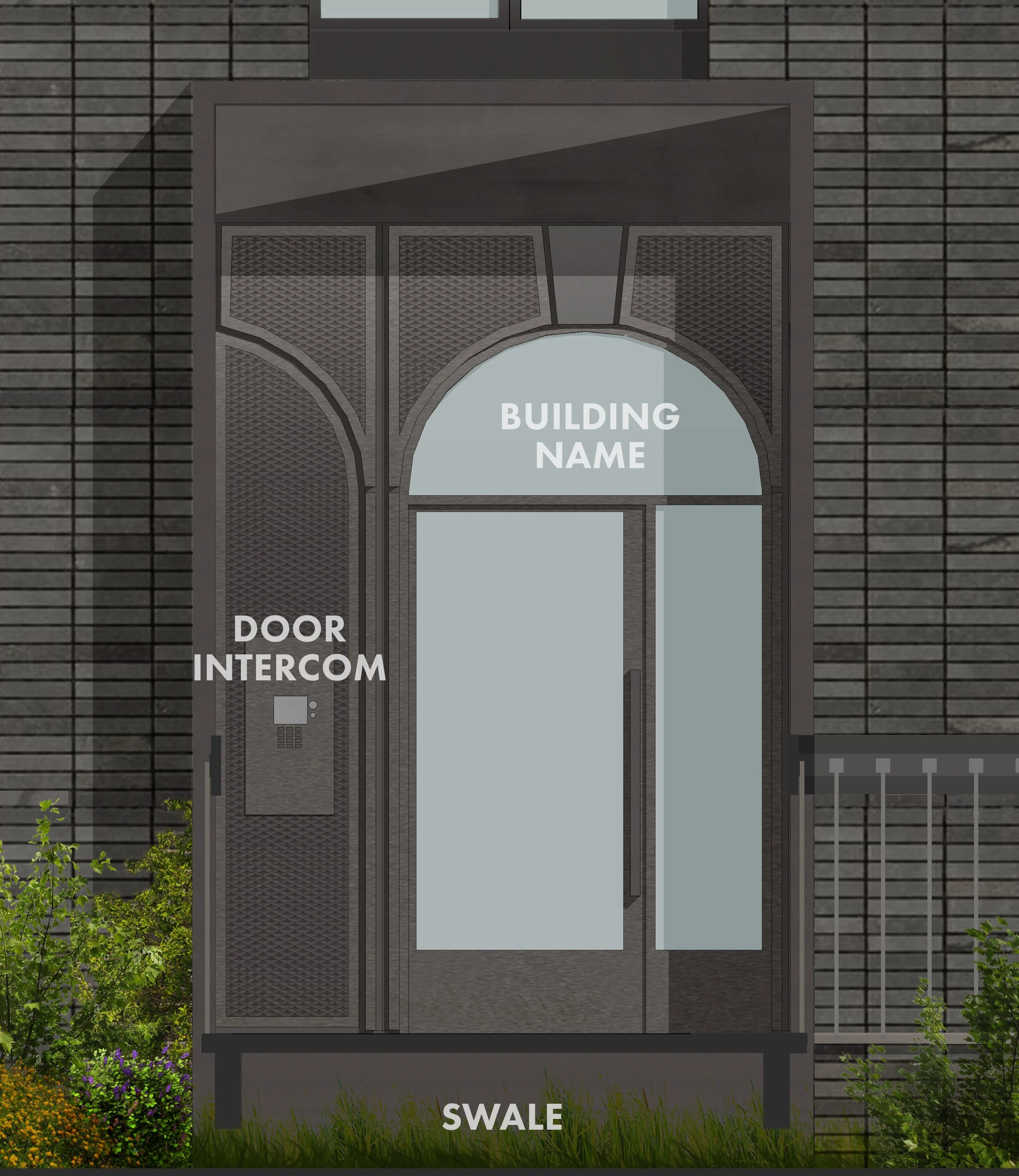
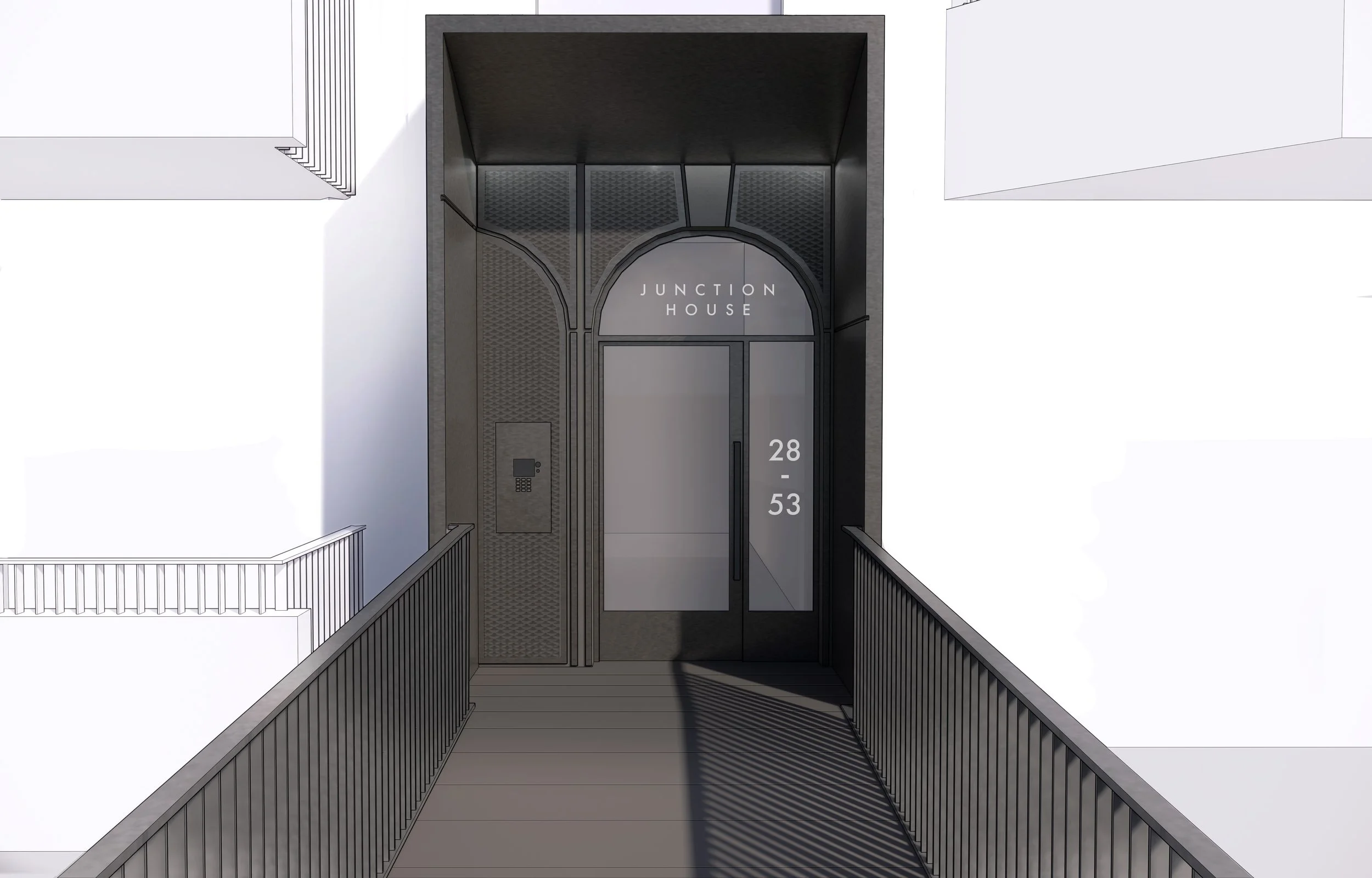
I explore various ideas for the lower valley entrances, with the team deciding that this proposal, referencing the distinct architectural language set up by the estate would be best. The design mirrors the double arches by using one as an entrance for the building and another section of arch for the intercom system. The arch on the entrance provides space for signage and glass is used to let light into the internal corridor and make clear if anyone is on the other side of the door. The design also alludes to the industrial past of the site, the previous gasworks, through its metal and expanded mesh materiality. The frame around the entrance is a tall square canopy that makes it obvious from the main path - it includes additional detailing on each side to reference the arches as well as a sloped roof for drainage. Integrated into the frame is the lighting, downlights are used which highlight the arch design and expanded mesh.
As well as diagrams showing it in section and elevation, there is also a render to give the impression of how the signage and downlighting would appear.
Renders
These images show how the various elements explored above look implement in the final proposal. The typologies are visible, each reflecting their context, and all using the banding logic that carries through the whole project. The design is not atypical for a new London development but has unique elements aimed at creating a high-quality and varied space. Replacing a gasworks site that took away from the local area, the design makes for a place where pedestrians take priority, with each building facing the routes through the site and the park now just walk away from Clementina estate.
From Clementina Estate
Block A, B and some of C are visible here. It showstoppers how each slowly moves away from the scale and form of the terraces while remaining in keeping with each other.
Inside the lower valley
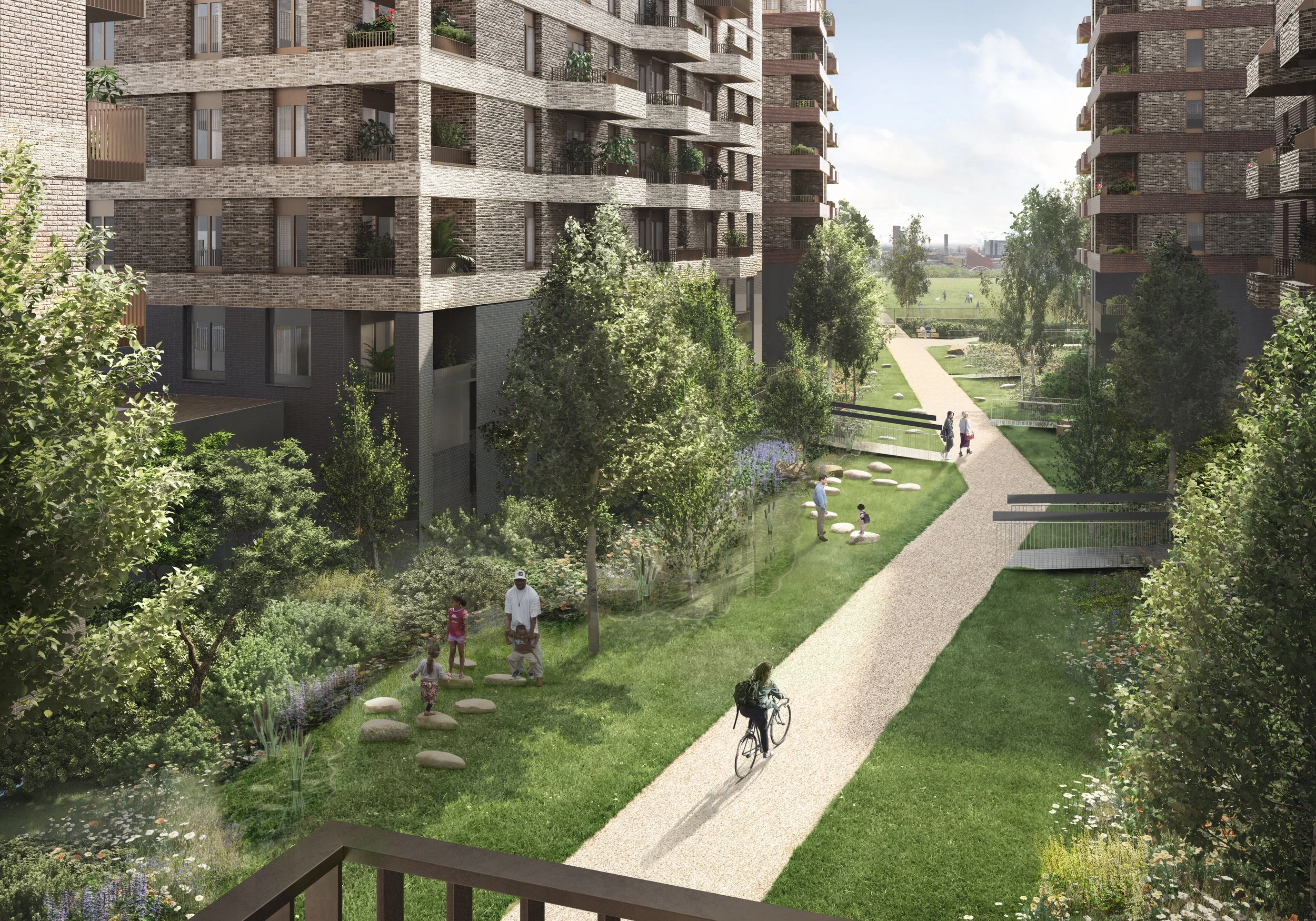
From a balcony on block B one can see the lower valley and the park beyond. The swales and their water-friendly planting sit against the dark plinths of each building providing privacy. The path is flanked by grass and various elements such as stones designed to encourage play. The only thing breaking through the greeny is the bridge bringing residents to their blocks by spanning the swales.
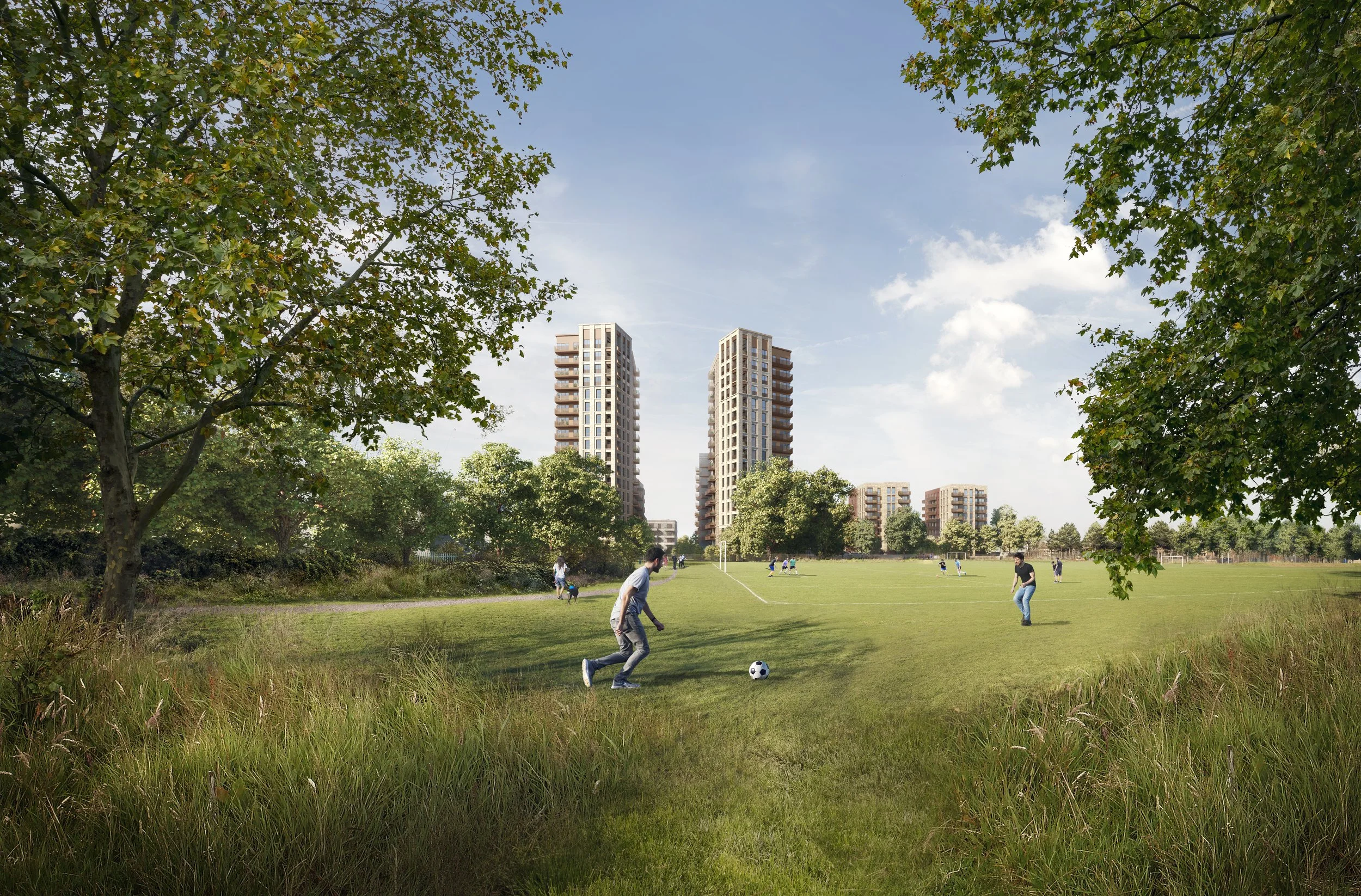
From Leyton Jubilee Park
The tower turn to open up the development to park, welcoming people into the estate. The height of the towers providing each flat views of the adjacent park and the wider development along the Lee valley. Once 3 gasometers were visible from this point, walled off and surrounded by a barren brown field site - soon these towers will replace them and will sit within a permeable and green space.