Home
Alisdair Milliken
+447950339671 - alisdairmilliken@outlook.com
University
Exploring my final university project, this section focuses on a project with a more conceptual brief and uninhibited design process.
Rhino
Grasshopper
3D Modeling
V-Ray
Illustrator
Photoshop
Printing
Sketchup
Hyperloop?
Before exploring the brief we set our team, it is important to establish was hyperloop is, and its various requirements and limitations.
What is Hyperloop?
Hyperloop is a proposed technology utilising a low-pressure tubes and magnetic levitation to enable super fast land based transport. The concept has existed in various forms but received renewed interest and more focused development after the publishing of a white paper by Elon Musk titled “Hyperloop Alpha”. It is important that we understand that hyperloop refers to this particular technology as Elon Musk has proposed various transit systems that often get mislabelled with this title.
Hyperloops low-pressure tubes and magnetic levitation reduces friction to extremely low levels. Small pods are sent between locations frequently at super highspeed. The overall effect is ridiculous low travel times between stations, ~15 minutes between Newcastle and Edinburgh for example.
How does Hyperloop work?
How does Hyperloop differ from existing rail technology?
We are used to the large scale of existing train infrastructure where train leave relatively unfrequently and, although capable of relatively highspeed, would be less than 1/3 the speed of a hyperloop pod. The sheer scale of these difference shown in below graphic. Trains also travel along routes with various stops. Hyperloop, as it is explored here, is a point to point transport, with pods traveling non-stop to each destination. They are best thought of as a frequent shuttle service with departures to each location in a system every couple minutes. This is a significant change from our existing experience of long distance travel and necessitates a different approach architecturally. The technology also requires entirely new infrastructure with existing railway track not being interoperable.

No.
Elon Musk’s proposal of hyperloop was likely motivated by a dislike of the Californian highspeed rail project and personal views on mass transit. Many of his proposals regarding transportation an based on individualist politics and are reflective of his ownership of a personal vehicle company, wealthy background, and private jet use. His proposals often miss the value of traditional public transport - that we already have well-developed ways to move large numbers of people. His other mass transport projects have shown to fail at achieving sufficient throughput.
Hyperloop proposes using two technologies that need significant research to utilise the way it intends. Maintaining low-pressure air tubes over hundreds of miles is both technologically difficult and potentially far more energy-intensive than practical. Magnetic levitation already has some development but is significantly more expensive than traditional rail - although much of passenger rail is not profit-making without government intervention, the single commercial “maglev” project operating at the moment was far more expensive to build than traditional rail and could not utilise any existing rail infrastructure. This latter point, relying on existing rail infrastructure, is a significant point when cities are already densely developed and existing rail stations offer a route into the centre of cities. These and other factors mean that hyperloop is like many other alternative rail projects, theoretically interesting but practically limited.
Is hyperloop plausible?
Hyperloop might be impractical but its offers an opportunity to explore a new typology and learn lessons and discover things that are applicable elsewhere.
As I mentioned earlier, hyperloop does not operate like any existing transport systems and its speeds would change several cities into continuous megapolitan areas. How would an architecture for a transport like this look, the transport is too frequent to justify shops and large waiting areas, so what inhabits the “station” space with it, and what logic guides the design of the architecture?
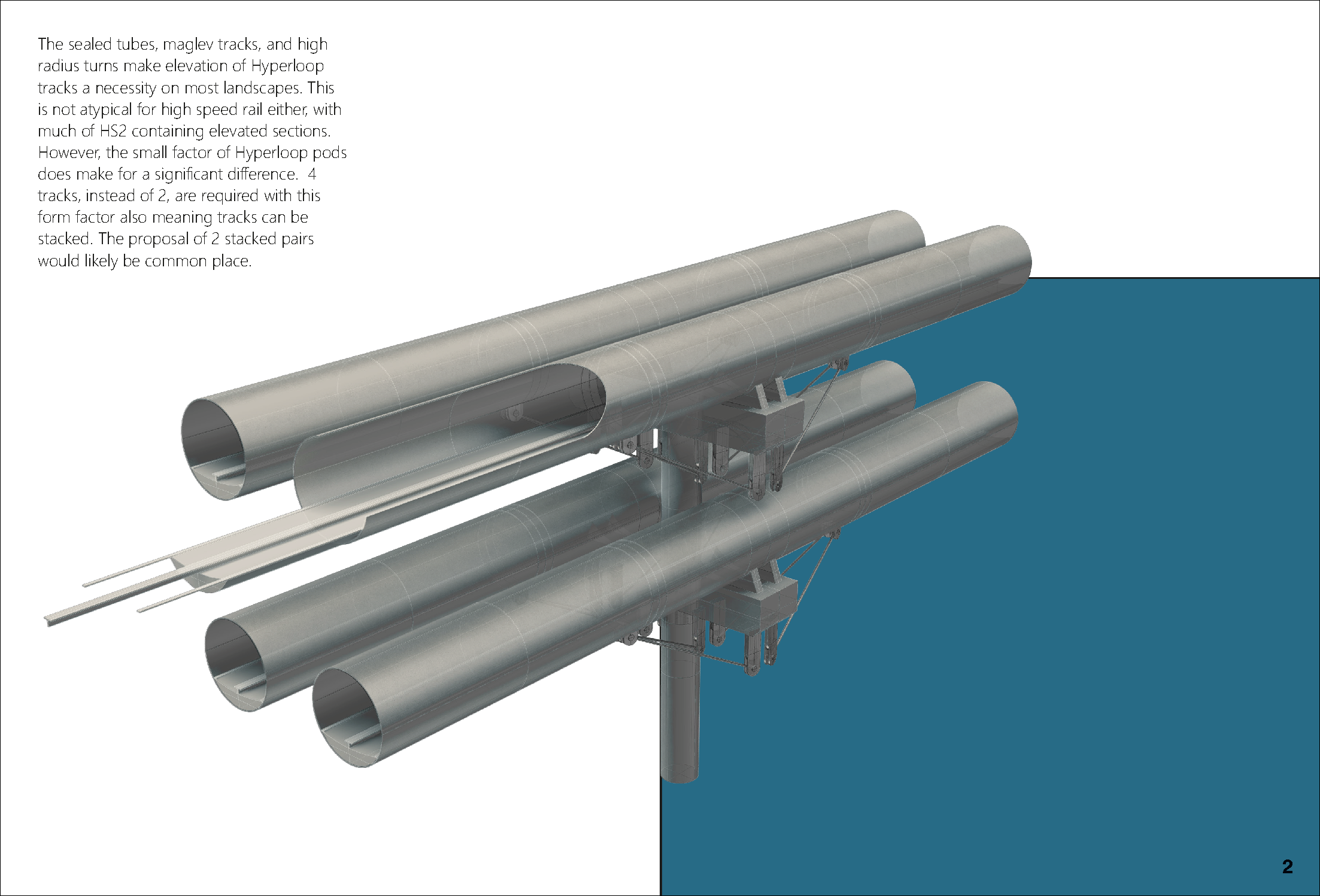
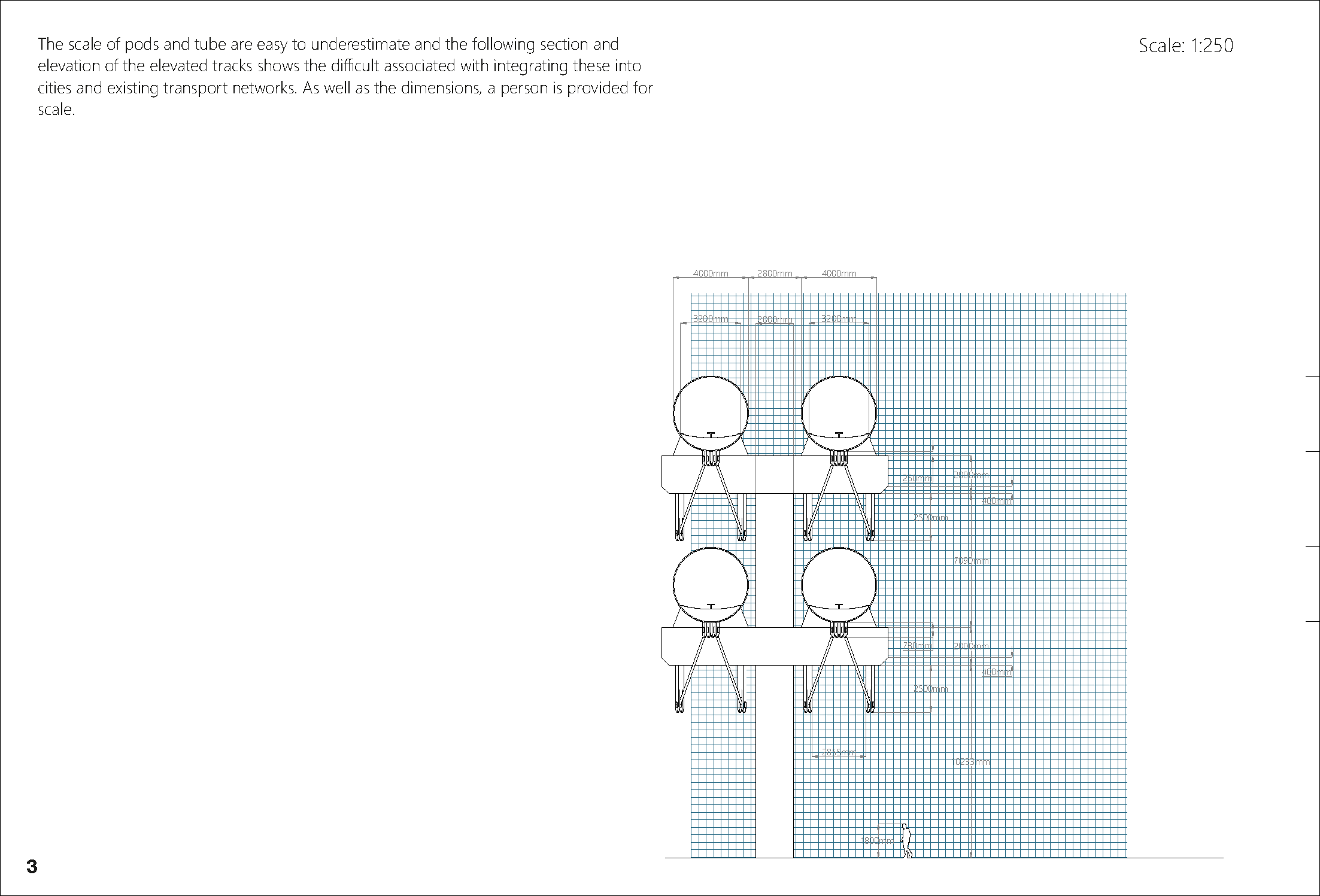
How does do the hyperloop pipes enter and interact with the city - how to they sit in the countryside? Hyperloop pods cannot run on top of existing rails but the interfacing between existing rail, bus and air transport is an important one, transport is best when it feeds into each other.
These kind of questions are worth exploring in the hypothetical because they explore things that real architecture deals with in a context that forces innovative and invention. Traditional projects can prompt traditional solutions and hyperloop can show us options we miss when working with the architecture we already know well.
This also applies beyond architecture with the technology and research for hyperloop already having various other uses.
So why design a hyperloop station?
Brief
The nature of open studio was to set yourself a brief. We were allowed to develop the brief overtime as we came to understand the task we set our team. Below is the brief we reached as we concluded the project having learned that our initial conceptions had focused too strongly on hyperloop as a technology and not enough about the kind of architecture it would provoke. This was one of the most important things this project taught me. As well as this setting of our own brief, the course had some required evidence to show our understanding of concepts related to structure and envelope and these were also included in the final brief.
The Brief
Balancing both the practical limitations of hyperloop and the larger important goal of creating high-quality architecture, develop a typology for the hyperloop station and show it implemented within Edinburgh, interfacing with both the existing transport networks and the historic city. As part of this individual station explore, in drawings, how the structure, construction, and envelope might work.
Technical Manual
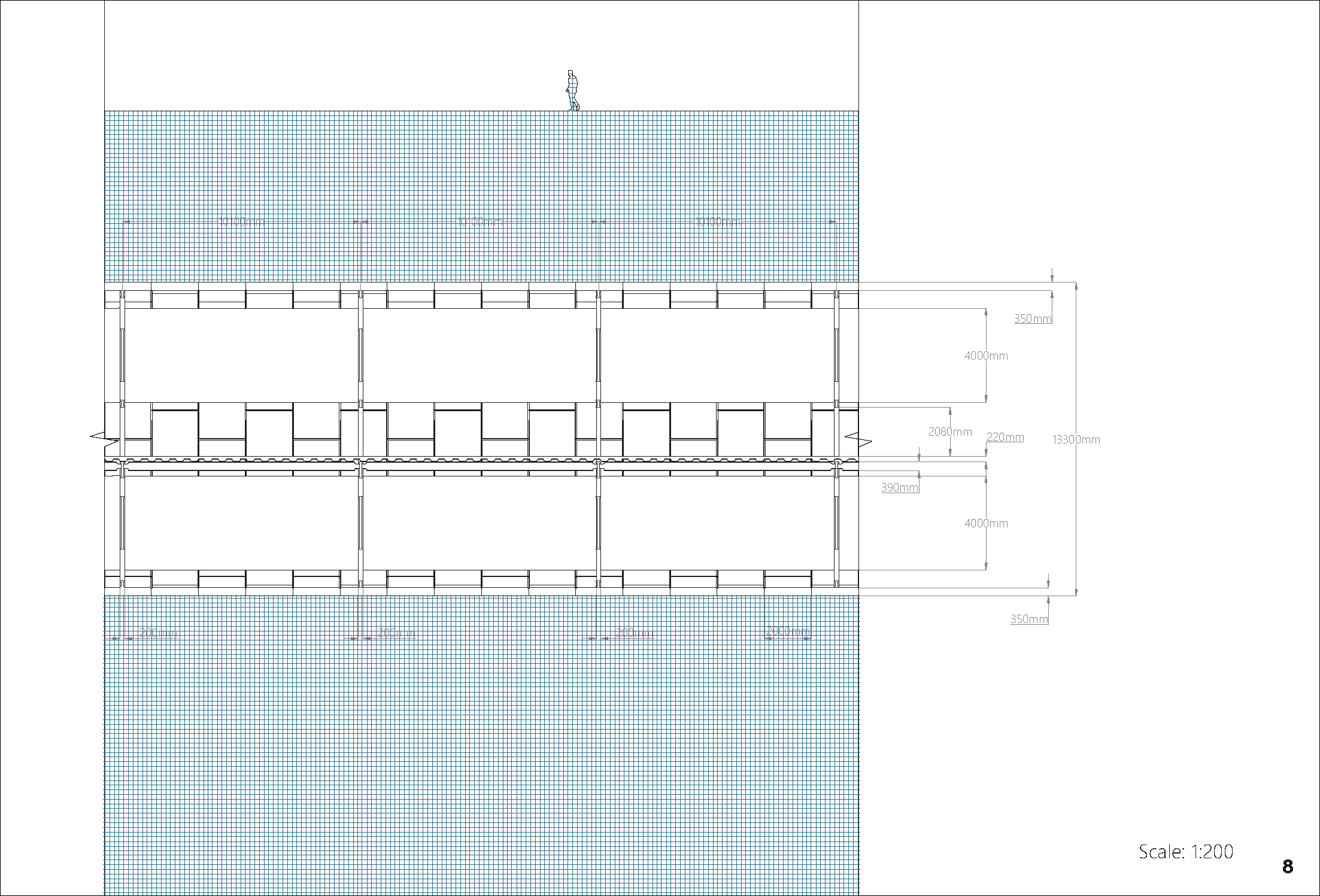
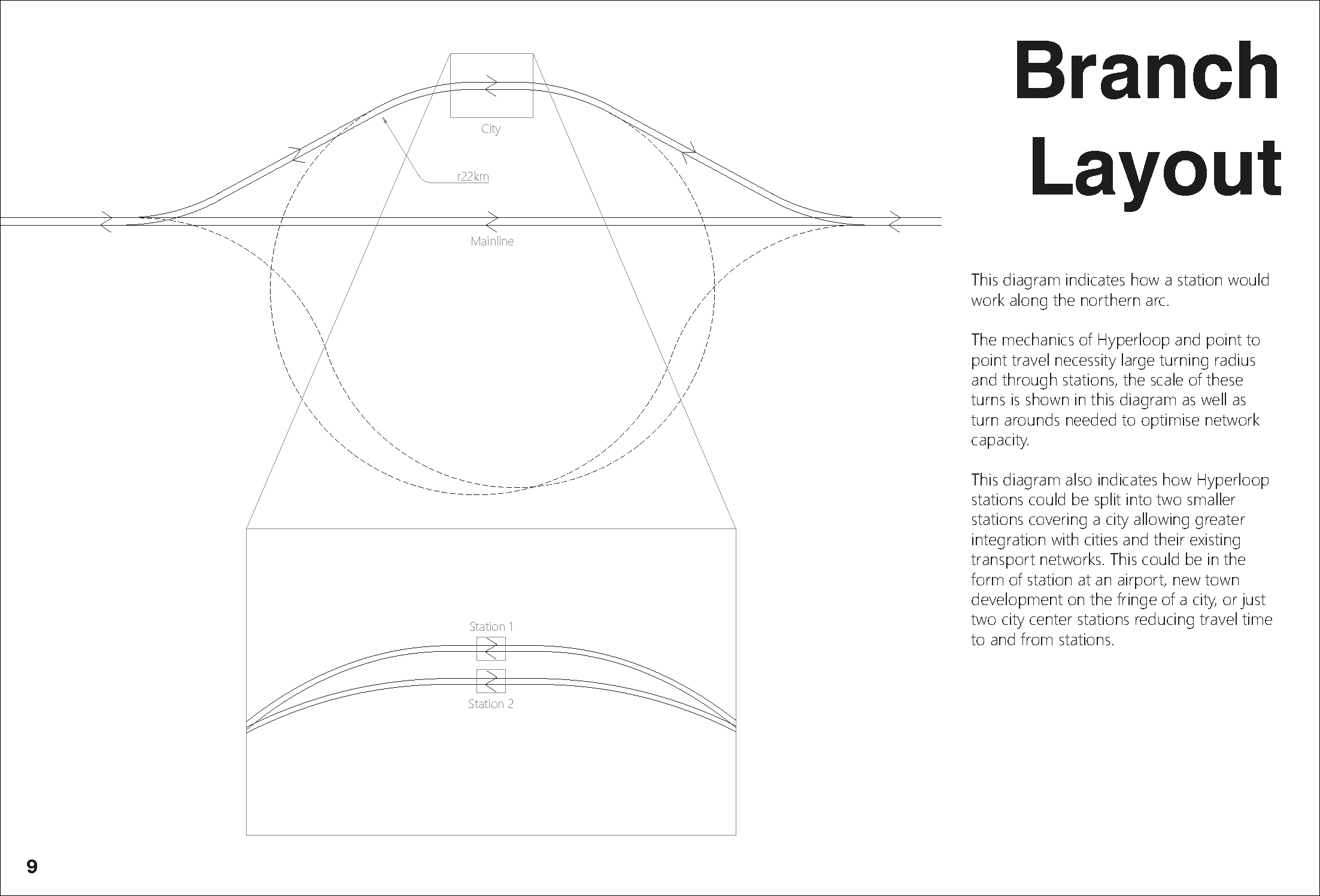
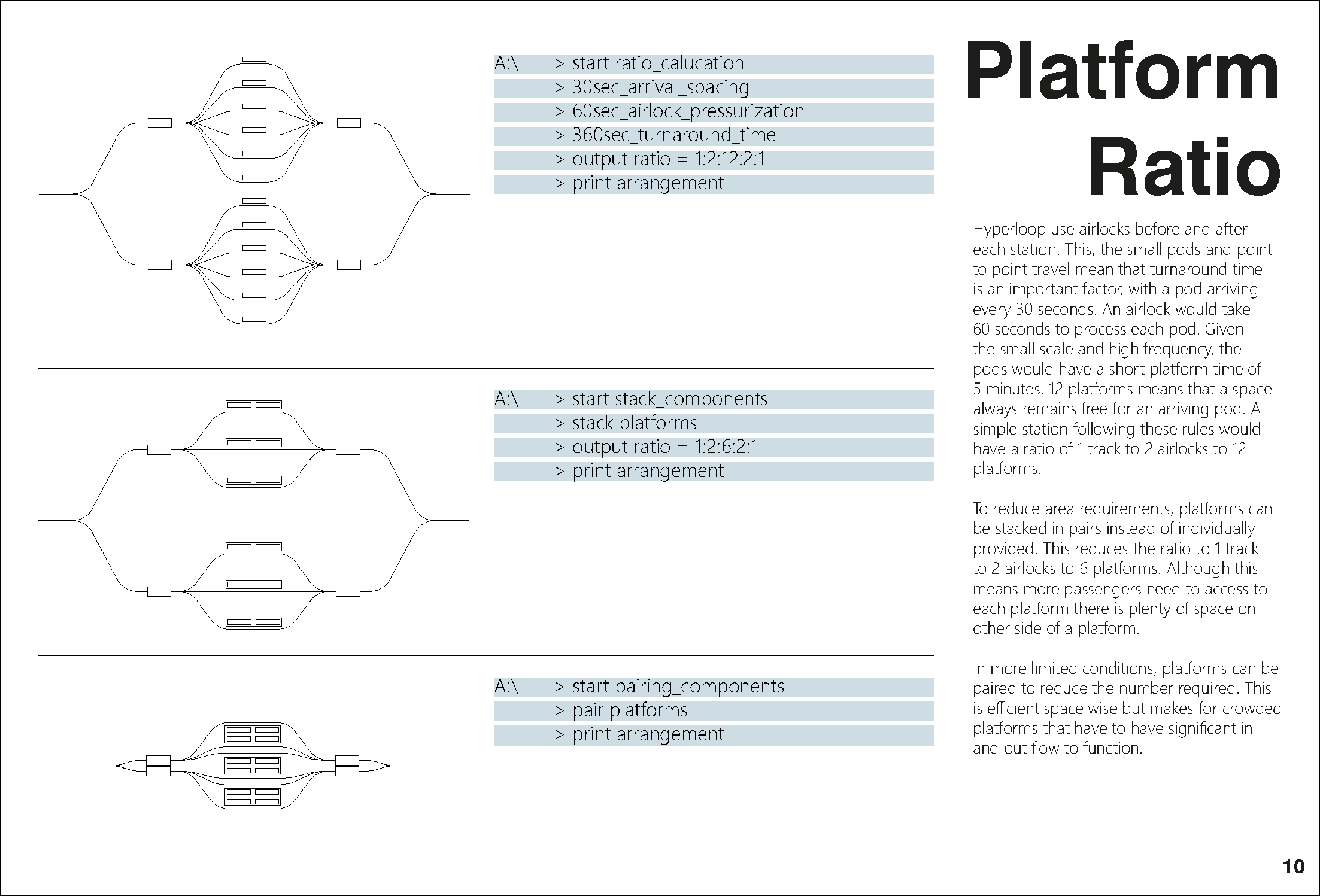
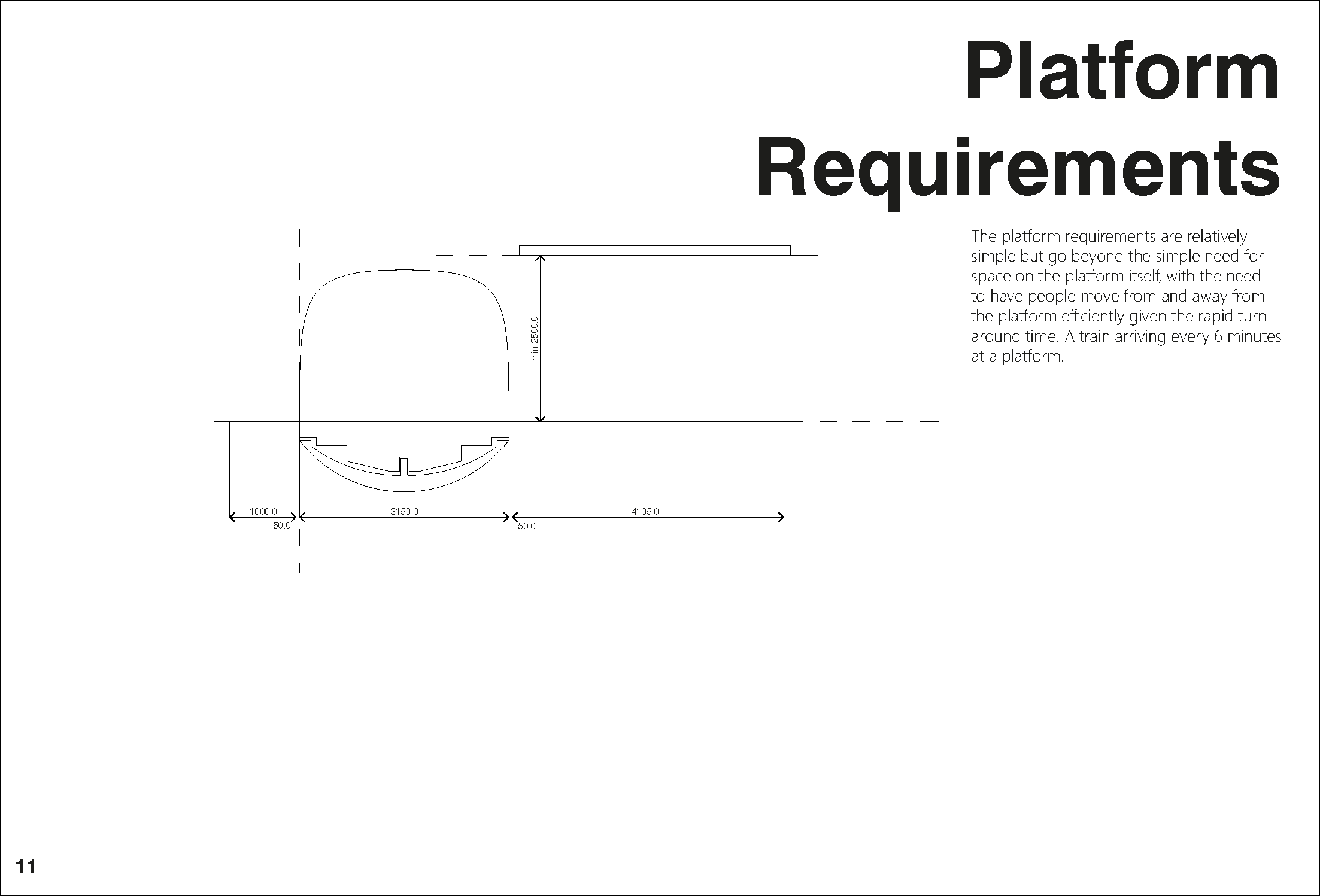
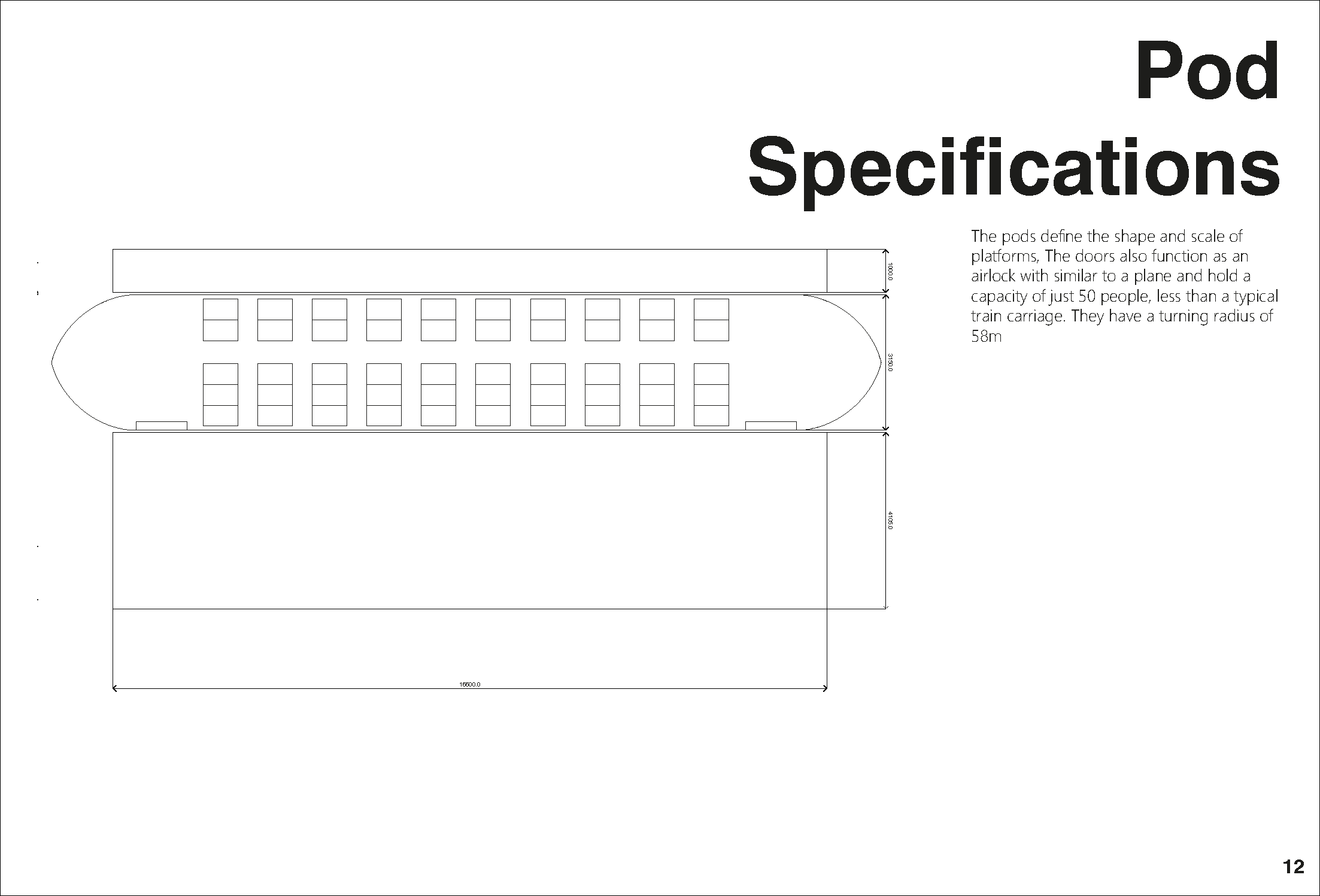
Our approach started with the development a technical manual. Explored in programmatic diagrams, we set about find and exploring the limits and requirements of hyperloop technology. We went to understand the platform, turning radius, throughput and the architecture of the network. The task was vital to our project but the difficulty with starting here was the fixation on the mechanical, physical and science of Hyperloop. We are not engineers and architecture, at least to us, is not just the optimisation for technical needs and so as we move forward we made steps to think beyond these confines.


Proposal
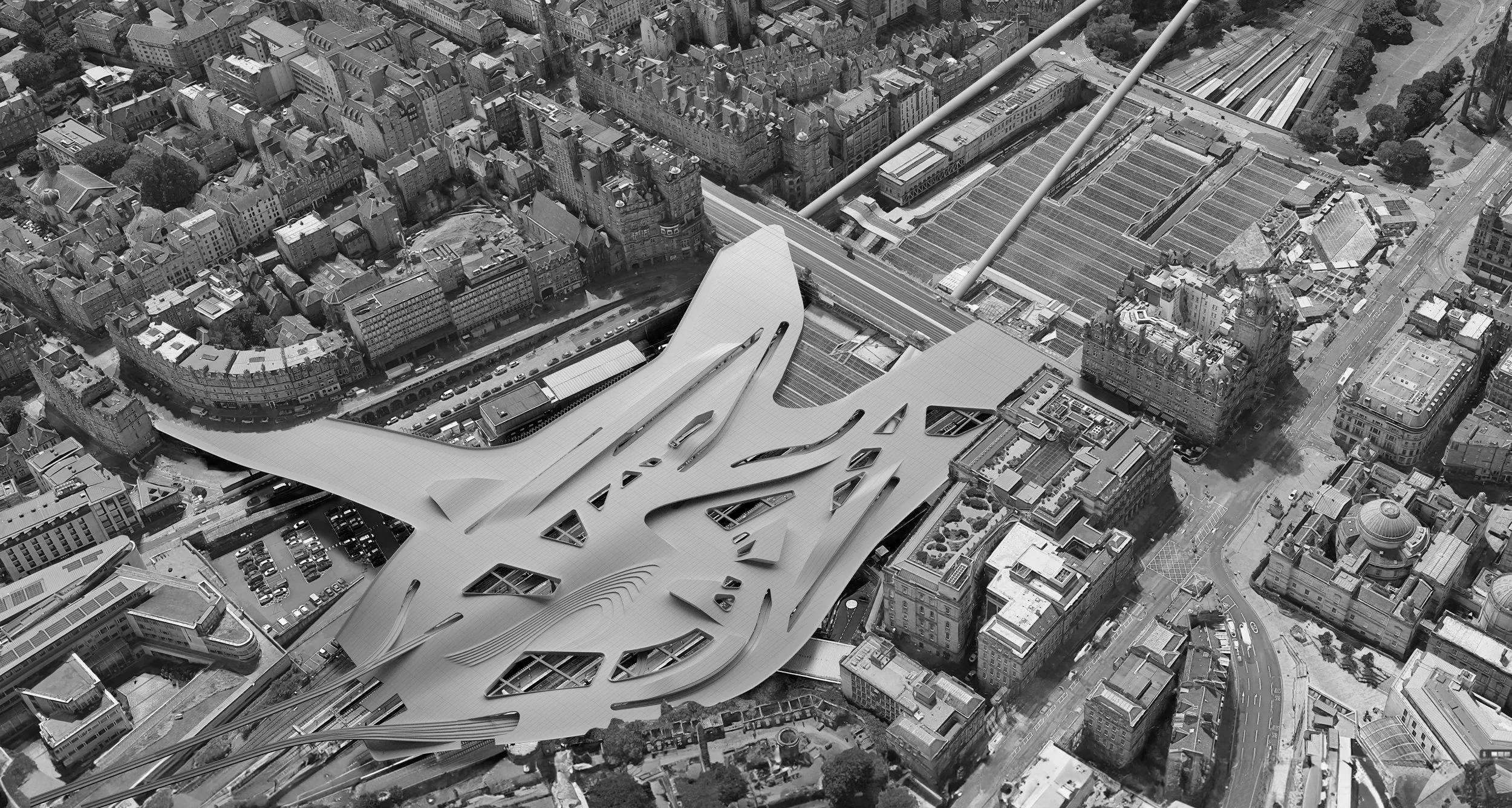
The proposed building covers the western half of Waverley station. An undulating surface replacing the existing roof and bridging various levels of the site, the structure establishes new routes across the city and between transportation. The surface is warped to provide public spaces and pavillions providing access to pods as well as different flexible workspaces. People from across the Hyperloop network can travel in a short time to any station to have a meeting fitting the era of more flexible and decentralised workplaces.
Although we wanted the drawings to be the primary representation of the project, it became clear the scale and complexity of the project required more. The render helps one understand the drawings.
Drawings
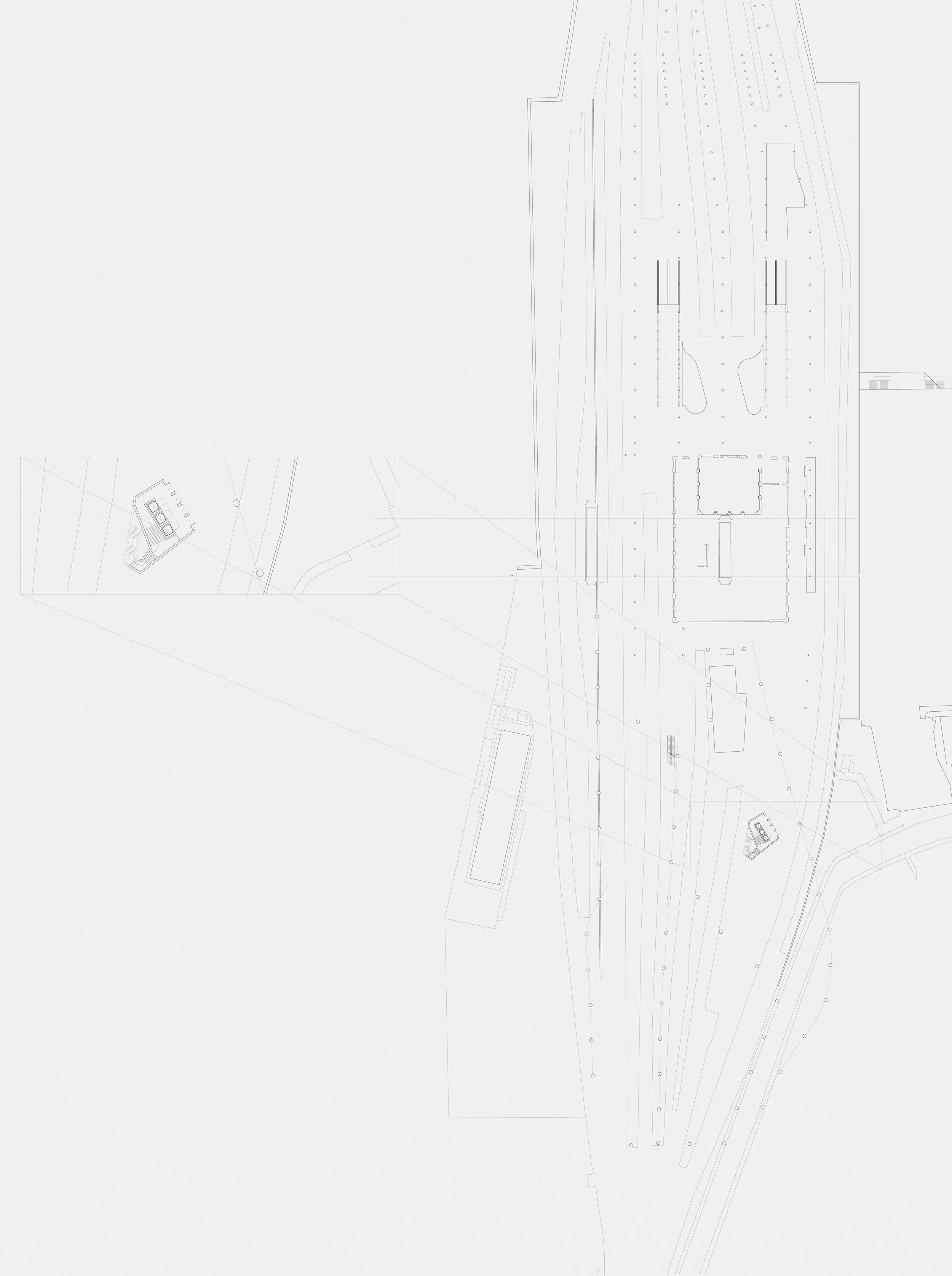
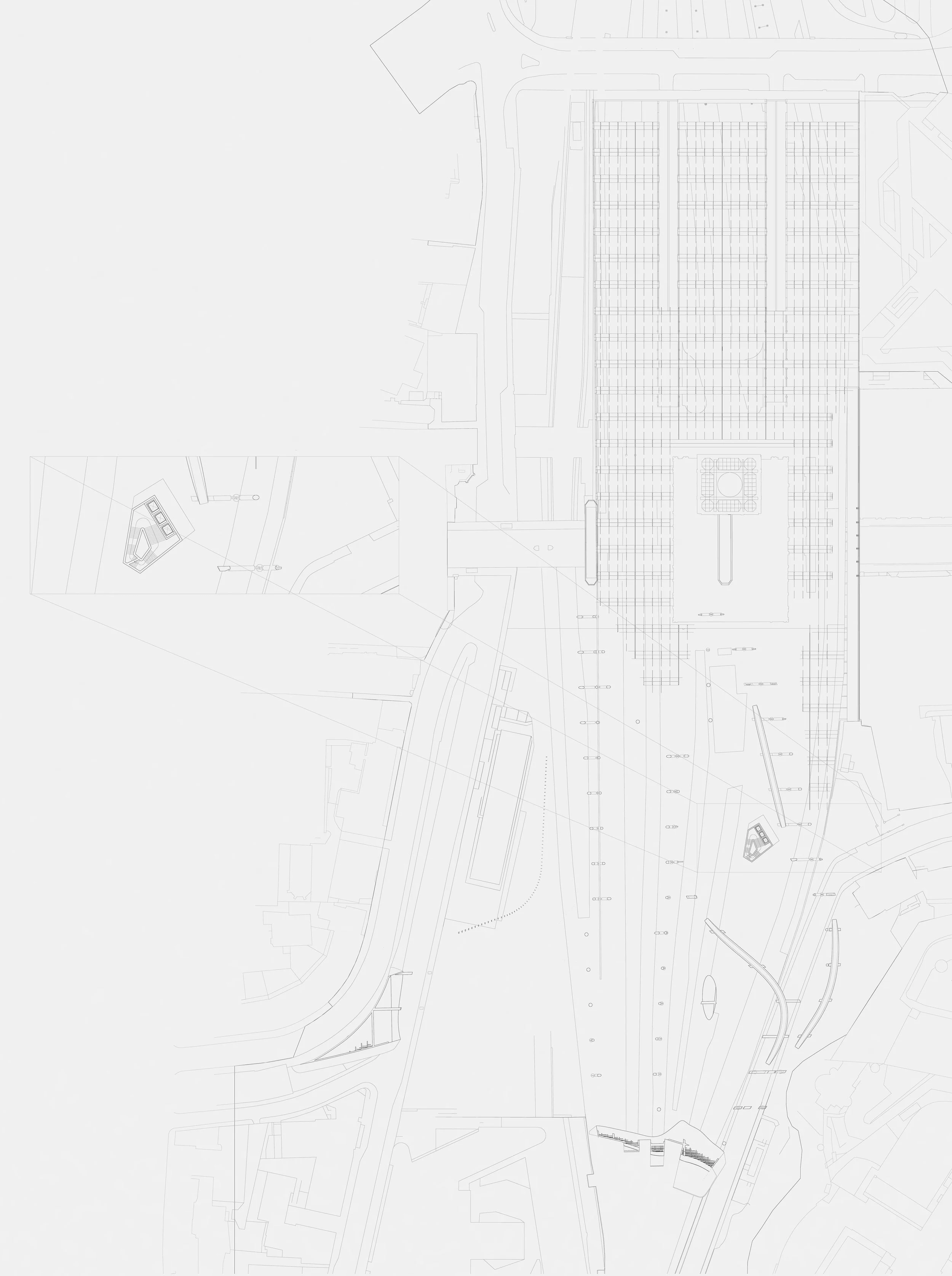
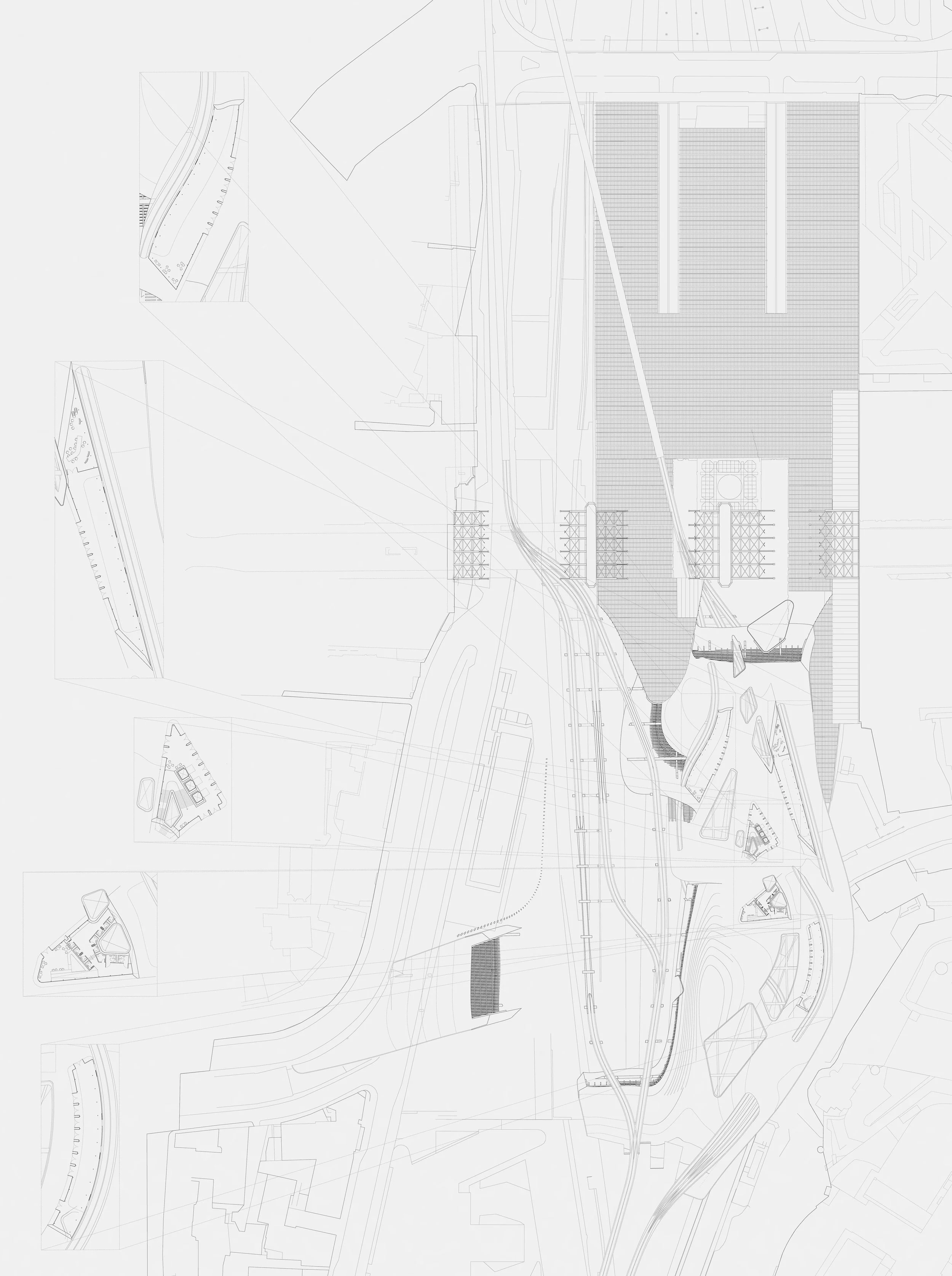
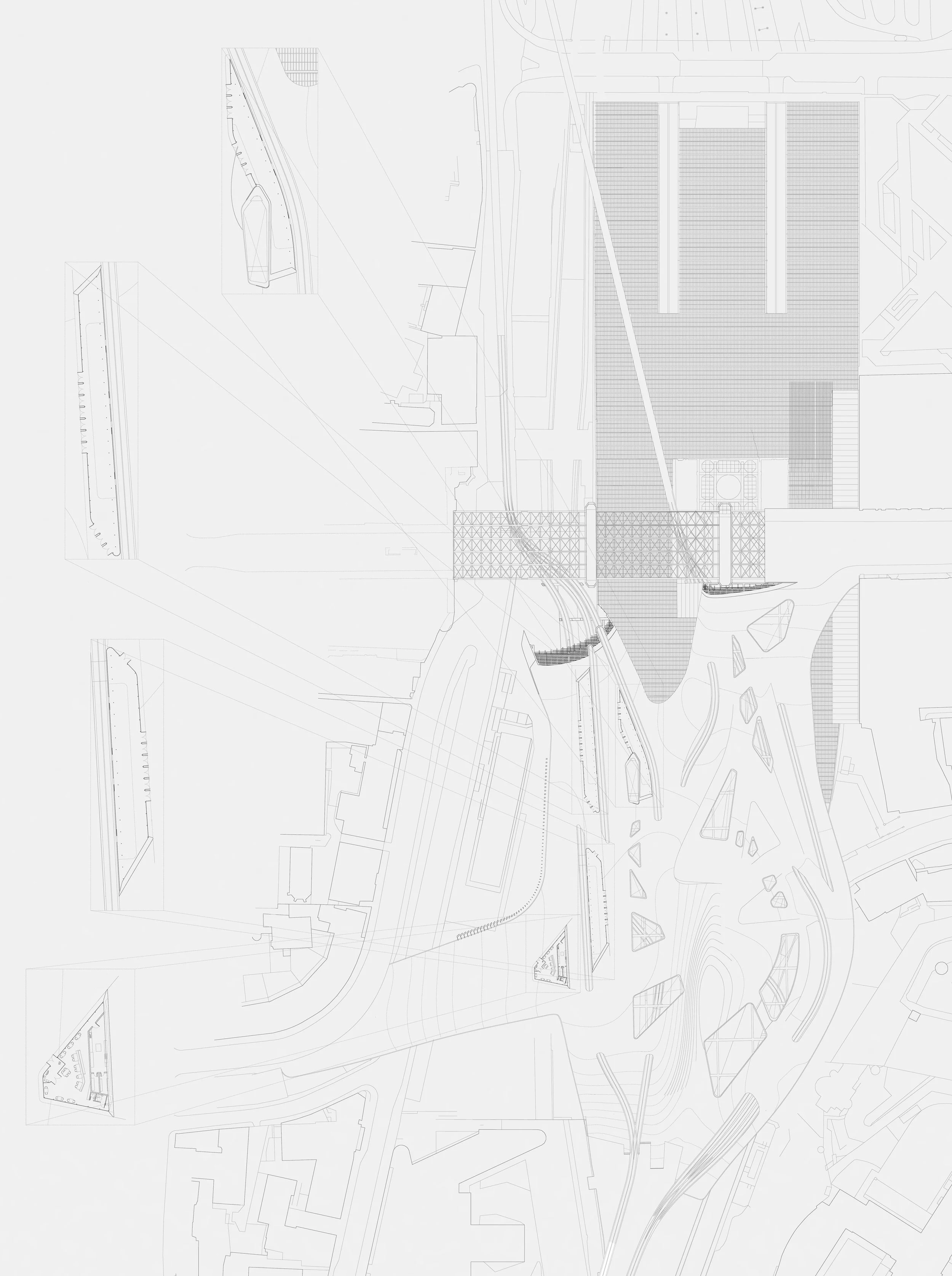
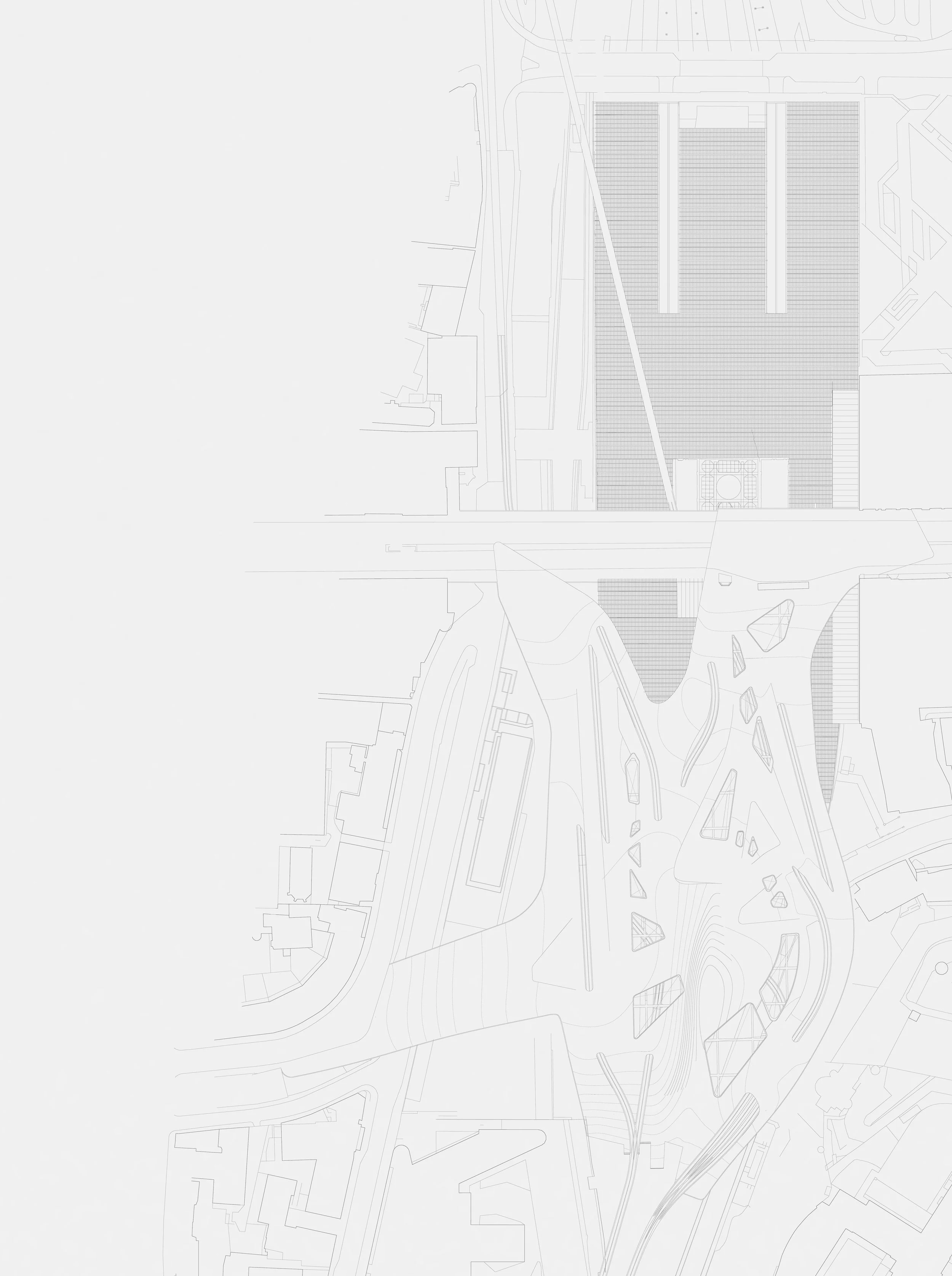
The scale of the building we proposed was represented physically with the scale of our drawings - even at 1:1000, the drawings here were printed a1 sheets of tracing paper. Our development process had focused on the intersecting protected views and the existing and potential routes through the site. We blended and warp a landscape as well as the ‘hyperloop’ tracks to these views and pathways. Our drawings used a strict design language that represented this process. Given the nature of the building, instead of floors, we took various cuts at different heights through the surface.
Plans
Sections
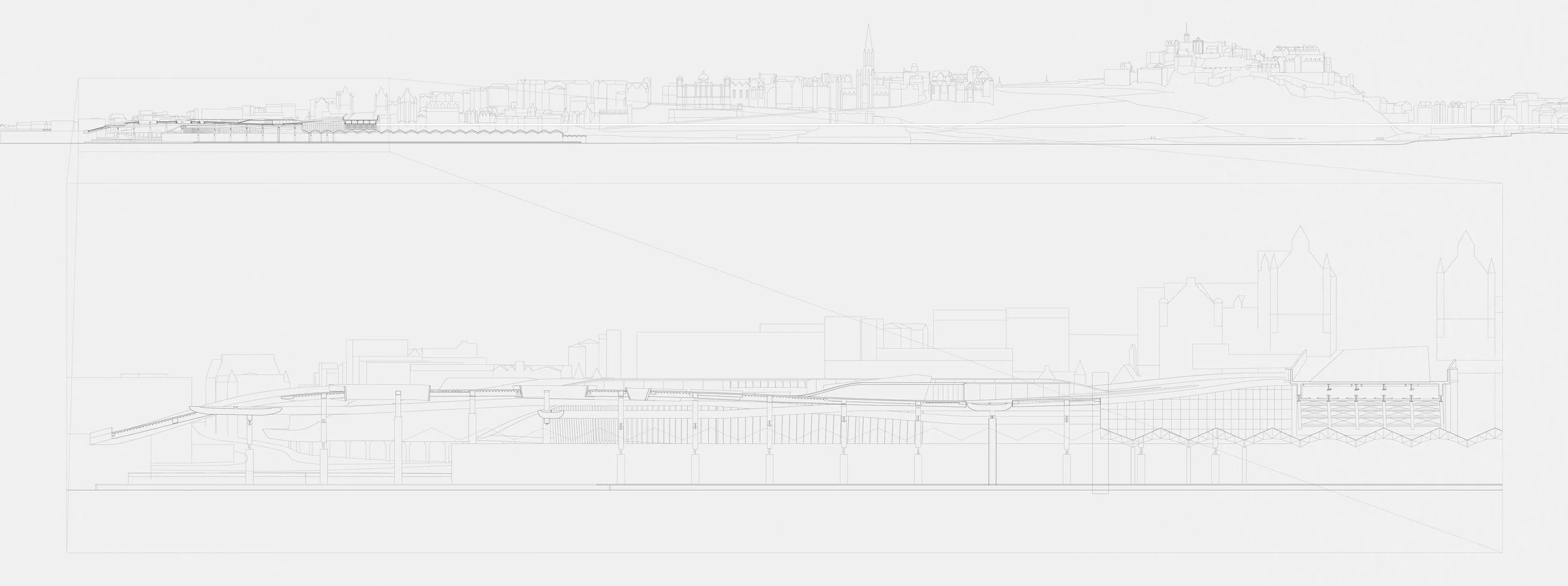
Section Facing Edinburgh Old Town
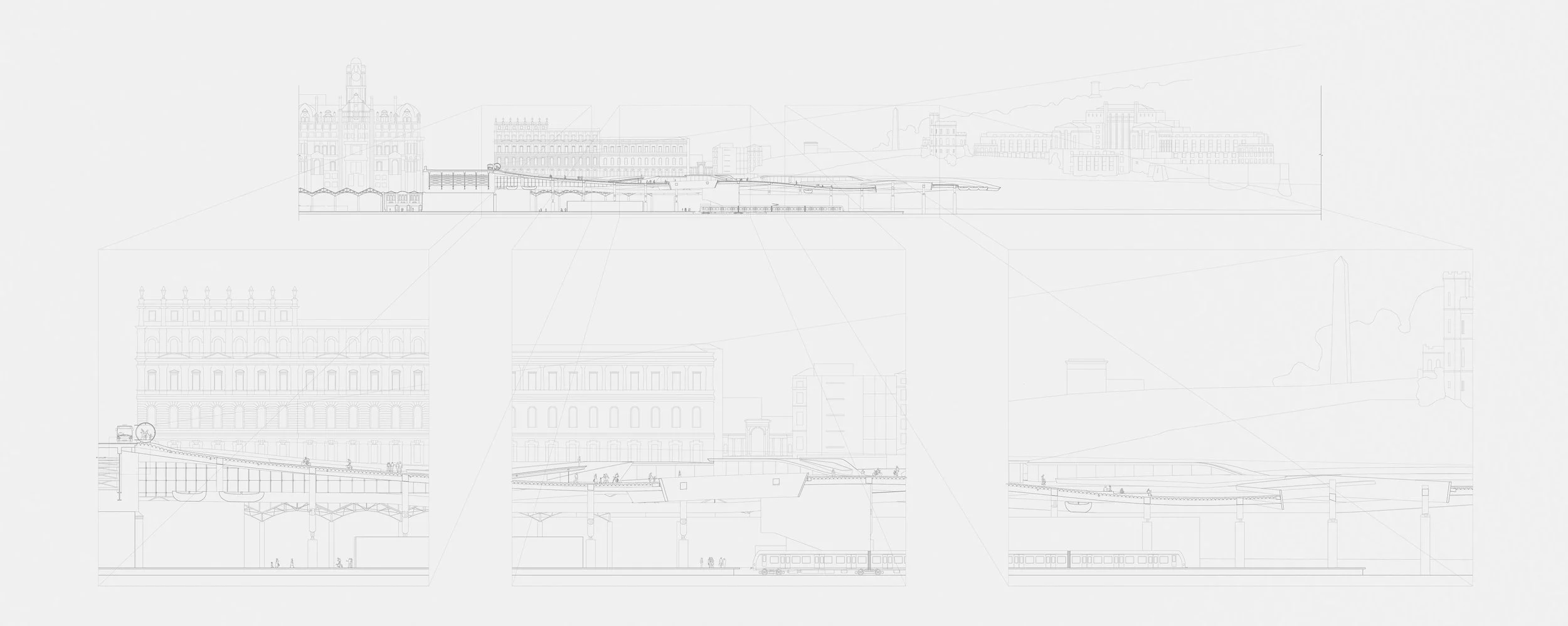
Section Facing Edinburgh New Town
Pavilion Details
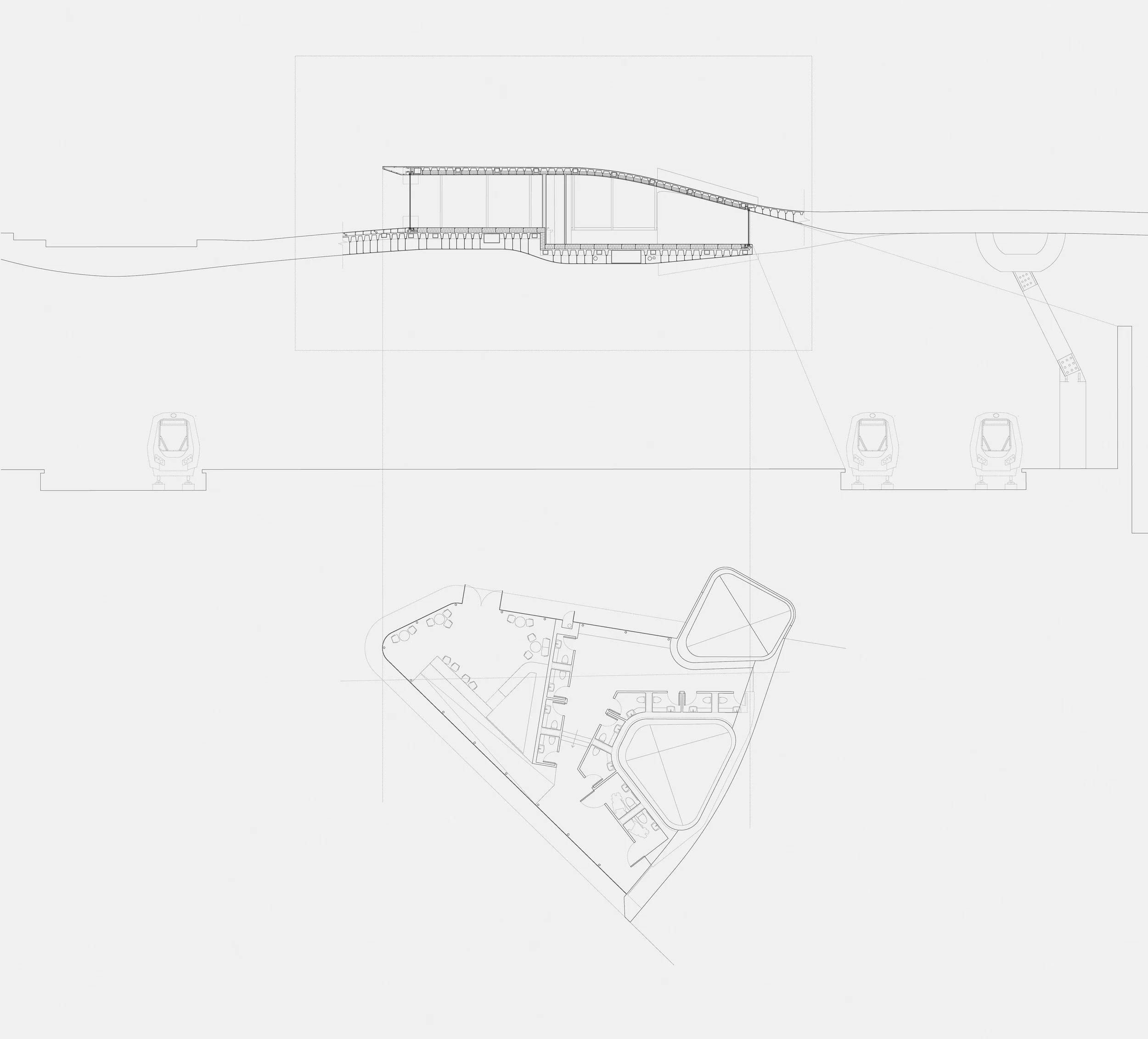
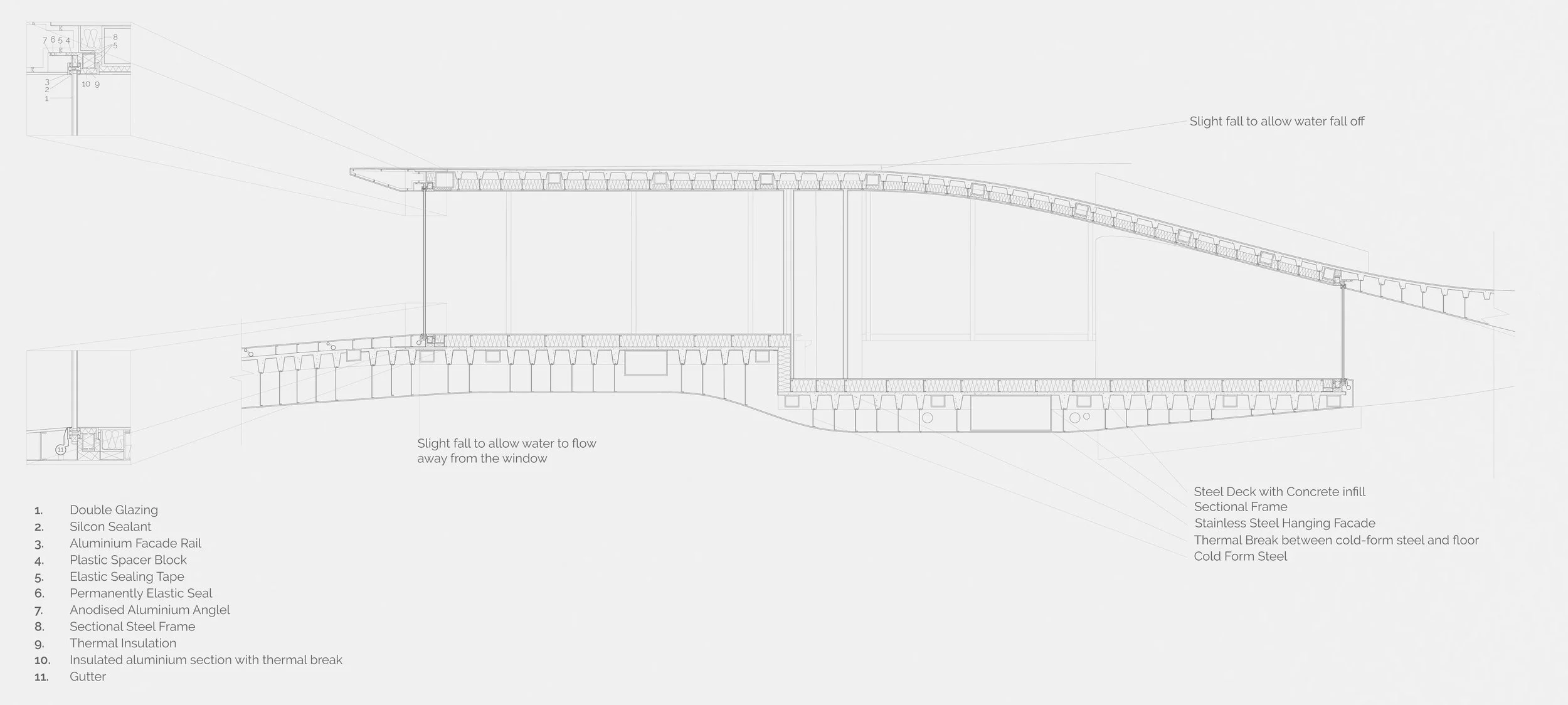
As part of the project, we needed to develop details for our building. The nature of the concept meant both the space below and above the enclosed pavilions was open to the outside. This detail explores the construction of the cafe and bathroom pavilion. The specifics of the details were chosen to maintain the visual of a continuous surface inside to outside and unify the frame into a minimalist floating surface.
To reduce the visual impact of the glass the details produced are designed to have the frame sunken into the fabric producing a frameless appearance